Best Restaurants in LA: 9 Spots Worth the Drive
Six days eating through LA. Nine restaurants across Pasadena, the San Gabriel Valley, and South Central, from a Michelin-starred seafood stall to an SGV bowl of galbi tang that stopped me mid-sentence. Here's the honest guide from someone who grew up eating in these neighborhoods.
The best restaurants in LA span neighborhoods and price points that most guides miss entirely. This list covers nine spots across Pasadena, the San Gabriel Valley, and South Central LA, including a Michelin-starred sustainable seafood stall, a Bib Gourmand masa counter, immigrant-run comfort food, and plant-based options that actually deliver. Every pick was visited over six days by a Bay Area chef who grew up eating in these neighborhoods.
The drive from San Francisco to Los Angeles is about six hours if you move without stopping, which I never do. My family is from the LA area, and coming back always feels like walking into a kitchen you grew up in. Everything is exactly where you remember it and somehow it all smells better than anywhere else.
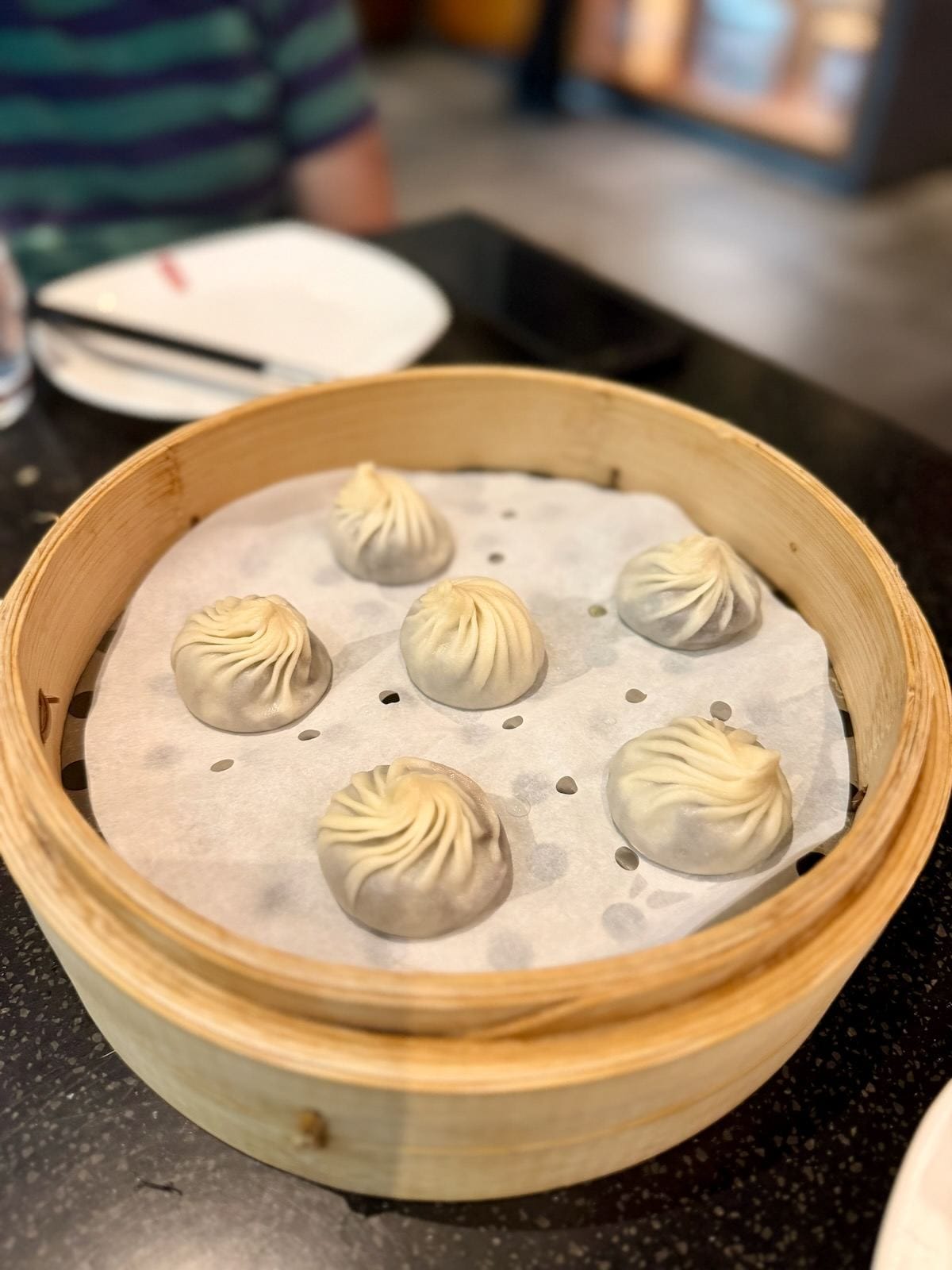
The first thing we ate was Din Tai Fung in Arcadia, inside the same mall I spent most of my teenage years hanging around. I have been eating at Din Tai Fung since before it had lines out the door, back when it was a neighborhood restaurant and I was playing basketball with the owners' sons on the Pasadena Bruins. They are now the co-CEOs of the USA operations. We would play ball and then eat there, this cycle of food and friendship I never thought twice about at the time. Watching it grow into the global operation it is today is one of those things that makes you proud and nostalgic at the same time.
The prices have climbed and the waits have gotten longer, but the pork soup dumplings are still exactly what they have always been. Some things hold no matter how big the empire gets.
That first meal set the tone for six days of eating across three neighborhoods, through nine restaurants that ranged from Michelin-starred counter service to a breakfast burrito spot that quietly became one of the best things I ate all trip. LA food culture rewards the people who paid attention before it was popular, the ones who know which neighborhoods to go to and which spots have been quietly excellent for years without needing anyone to discover them.
Why Does LA Have Better Everyday Food Than Most American Cities?
The answer comes down to density and immigration, and the two are inseparable in Los Angeles. Communities from Mexico, China, Korea, Japan, the Philippines, Thailand, and Central America have been building food cultures in this city for generations, and they built them for themselves, not for a broader audience. The result is a city where a strip mall in the San Gabriel Valley holds a bowl of galbi tang nourishes your soul, where a Michelin-starred seafood stall operates out of a community market in South Central, where a taqueria makes a blue corn tortilla that tastes like it carries actual ancestral memory.
Living in the Bay Area, I appreciate what we have. But the honest difference is this: in LA, extraordinary food shows up at every price point and in every neighborhood. You can spend fifty dollars and walk out of a Michelin-starred restaurant feeling like you won something. In the Bay, you have to look harder and spend more to find the equivalent. That gap matters when you think about food as something that should belong to everyone, not just people with a certain budget.
What Makes the San Gabriel Valley Worth Going Out of Your Way For?
The SGV is probably the most consequential food destination in the United States that food media consistently underserves. It has one of the highest concentrations of authentic Asian restaurants in the country, built over decades by immigrant communities who brought their culinary traditions with them and kept them intact.
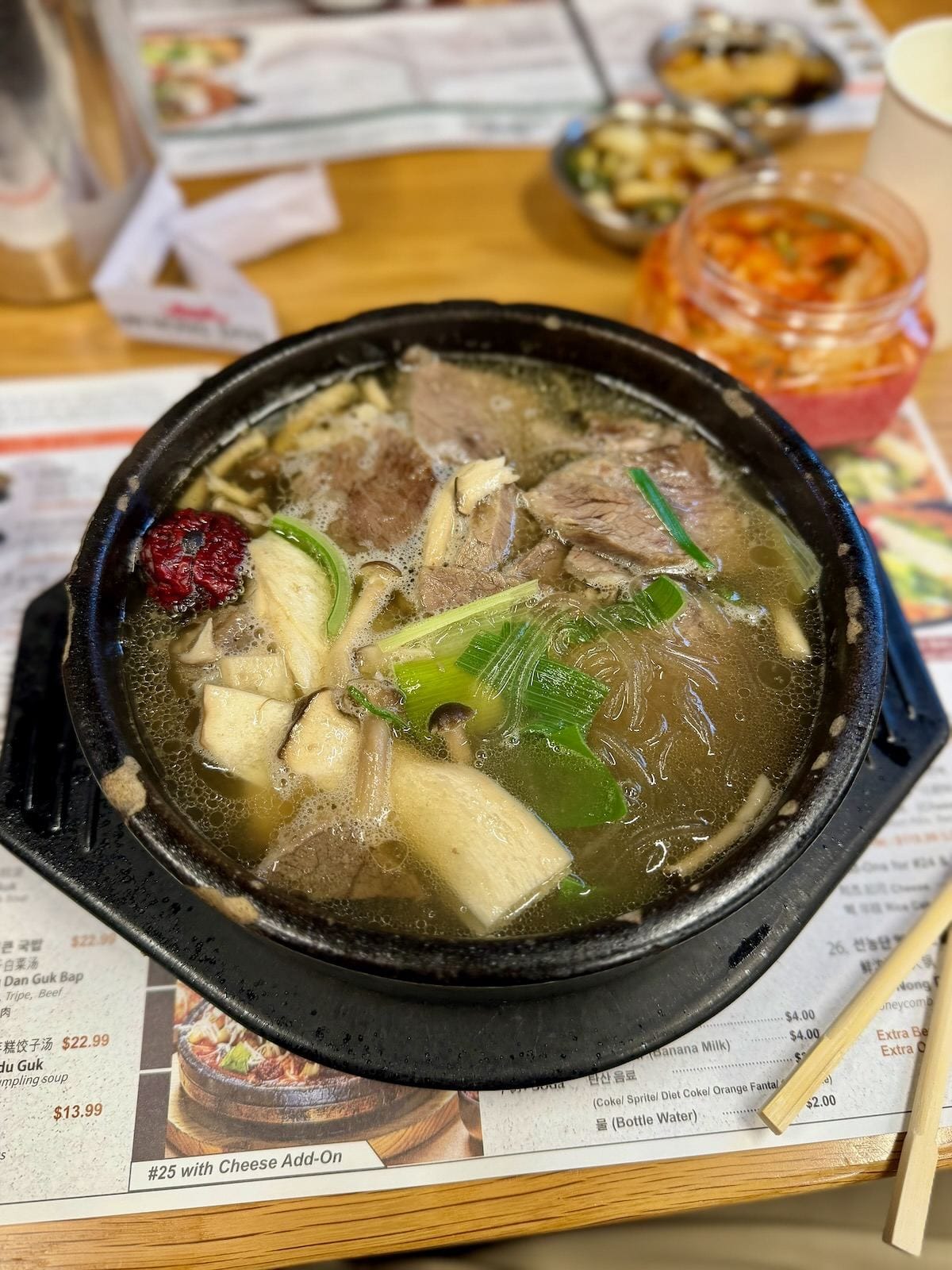
Oseyo Shabu Shabu in Pasadena does hot pot the way it is meant to be done. The vintage beef is the order. The experience of cooking your own food at the table while the restaurant fills up around you with multigenerational families on a weeknight is its own kind of pleasure. Sun Nong Dan in San Gabriel does galbi tang with purple rice that has the kind of broth that takes all day to make properly. The short rib is tender in the way that only long, patient cooking produces, and the portions are generous in the way that immigrant cooking often is, feeding you the way someone's grandmother would, without any reservation about whether you have had enough.
These are unassuming, immigrant-run restaurants built entirely around the quality of the food. There are no tweezers, no tasting notes, no ambient lighting designed by a consultant. They cook and they feed people well, and they have been doing it for years.
What Is Holbox and Why Did It Just Earn Its First Michelin Star?
Holbox sits inside Mercado La Paloma in Historic South Central Los Angeles, one of eight restaurants in a community market that has been a cultural anchor in the neighborhood for years. Chef Gilberto Cetina grew up cooking alongside his father at Chichen Itza, the neighboring stall inside the same market, before opening Holbox in 2017. The restaurant earned its first Michelin star in 2024, held it through 2025, and landed at number 42 on North America's 50 Best Restaurants list the same year. You order at the counter, find a seat in the shared market space, and eat some of the most thoughtful coastal Mexican seafood in California.
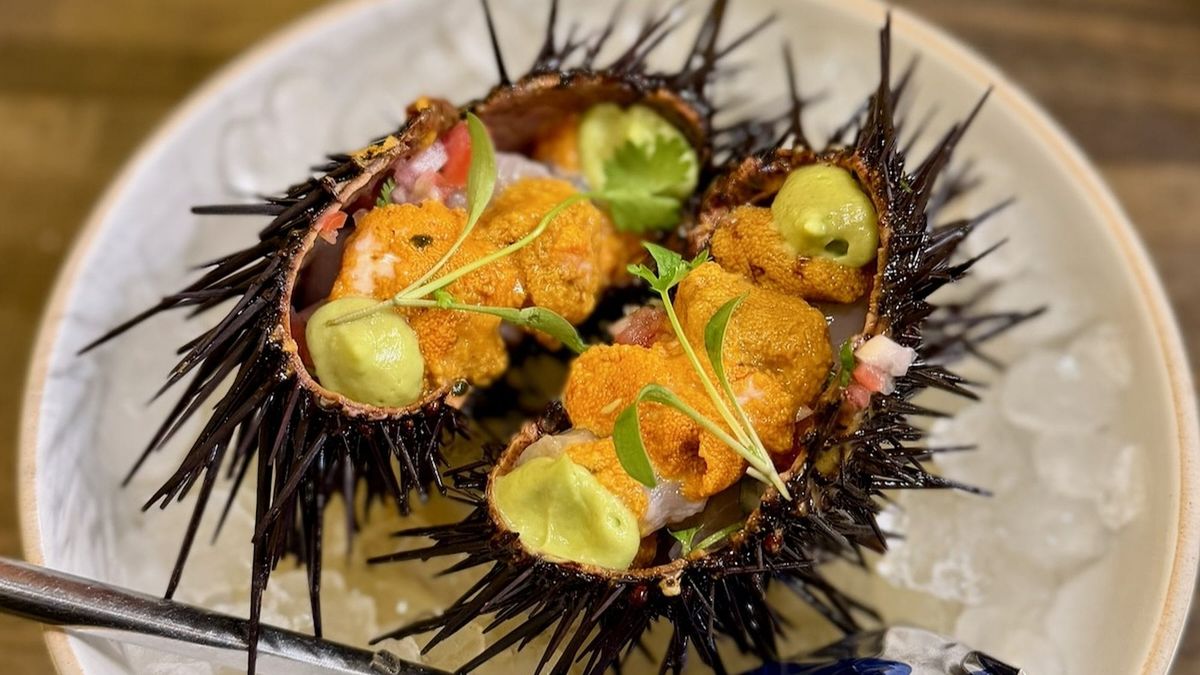
The sea urchin ceviche with scallop and avocado salsa is the dish that stays with you. Cold temperature, soft creaminess, a clean line of acidity running underneath all of it. What makes the dish mean something beyond the flavors is knowing where the sea urchin came from. Holbox sources their uni from Stephanie Mutz of Sea Stephanie Fish (@seastephaniefish), California's only female uni diver, who harvests sustainably off the Santa Barbara coast and delivers directly to the restaurants she works with. Stephanie is a former marine biologist who pivoted from research to diving and built her business around quality over quantity, harvesting less and doing it more carefully. That philosophy runs through the dish in every bite.
I walked out having spent about fifty dollars on tacos and ceviche at a Michelin-starred restaurant. That ratio, world-class sourcing and genuine expertise at a price point almost anyone can access, is the whole argument for why Holbox matters beyond the accolades. If you want to understand what sustainable seafood can look and taste like when a kitchen takes it seriously, this is the table to find.
What Was the Most Surprising Meal of the Trip?
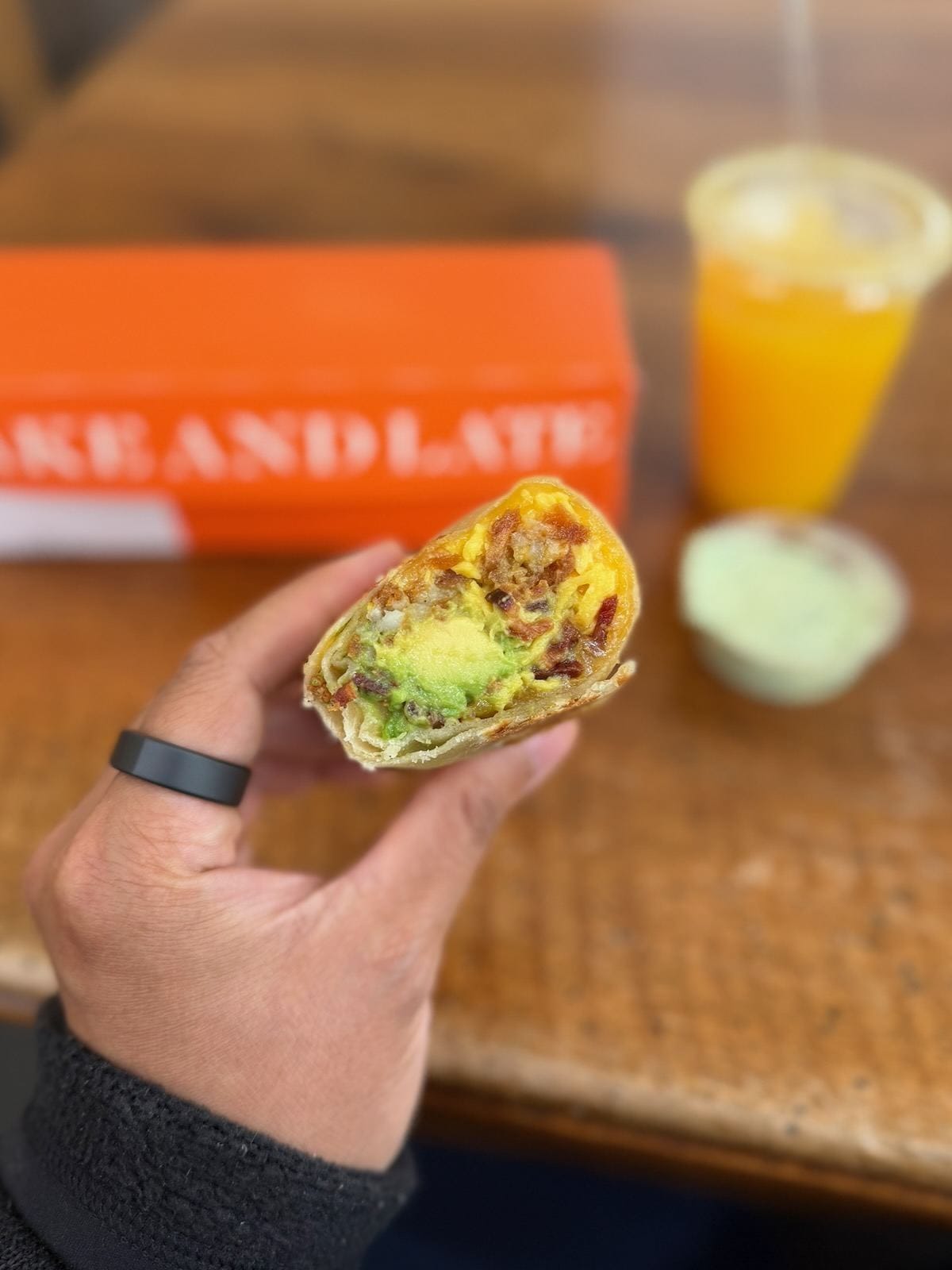
Wake and Late in Pasadena.
Growing up around Pasadena, the reference point for a breakfast burrito was Lucky Boy's: enormous portions, diner energy, the kind of place you go after a long night and leave full for the rest of the day. Wake and Late operates from the opposite philosophy. The burrito is smaller, more refined, and the price reflects that. By the numbers alone it should feel like a step down.
But the texture was phenomenal, every component in proportion, every flavor dialed in, and I kept sitting with it trying to understand exactly why it worked as well as it did. The answer, I think, is restraint. They made a more considered version of a thing I grew up loving rather than trying to compete on size or nostalgia, and the result is one of the best breakfast burritos I have eaten anywhere. There is a lesson in that approach that extends well beyond breakfast.
What Does the Blue Corn Tortilla at Komal Actually Taste Like?
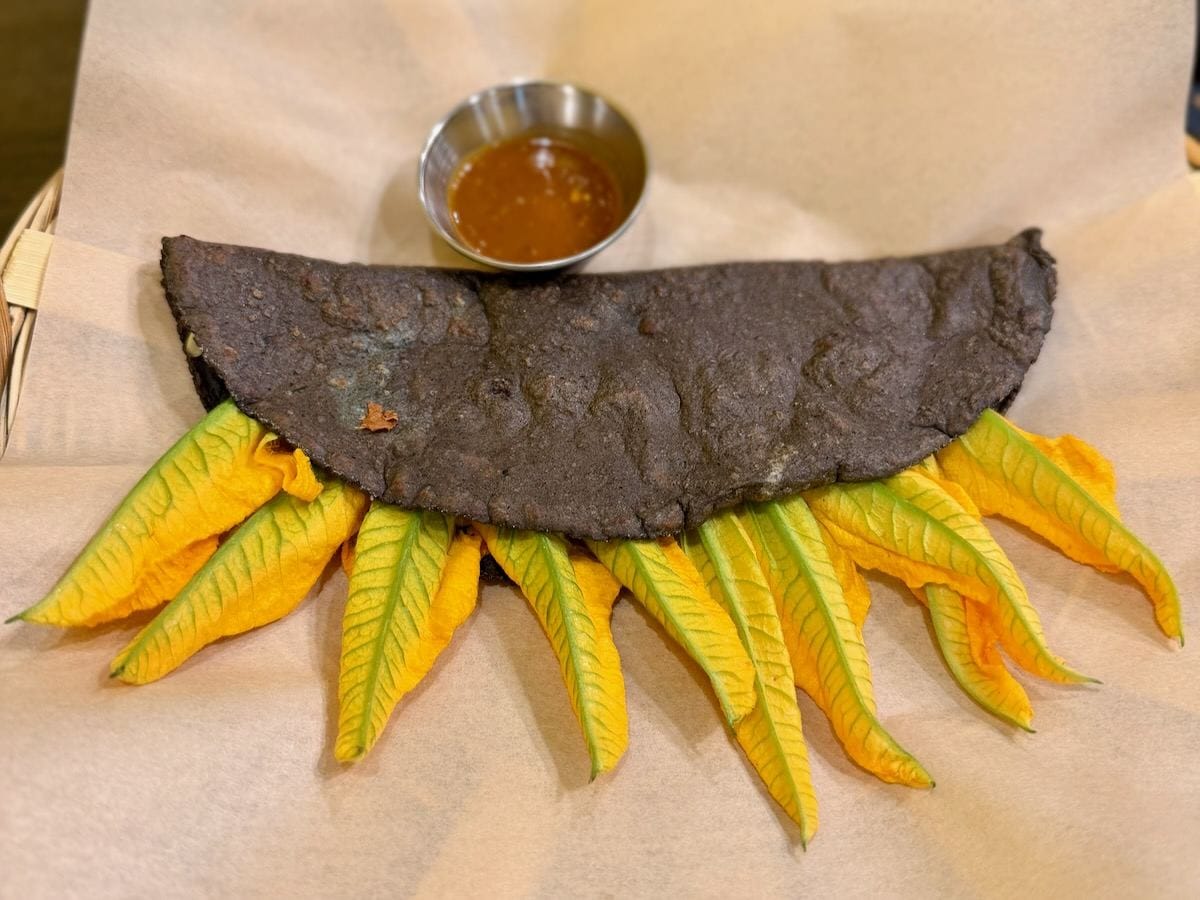
Komal is a masa-focused stall inside Mercado La Paloma, founded by a couple who both came up through Chef Gilberto's kitchen at Holbox. The relationship between the two spots runs deep enough that Holbox sources its tortilla masa from Komal directly, a detail that tells you everything about the level of trust and shared philosophy between them. Komal holds a Michelin Bib Gourmand designation, recognizing good quality food at a reasonable price.
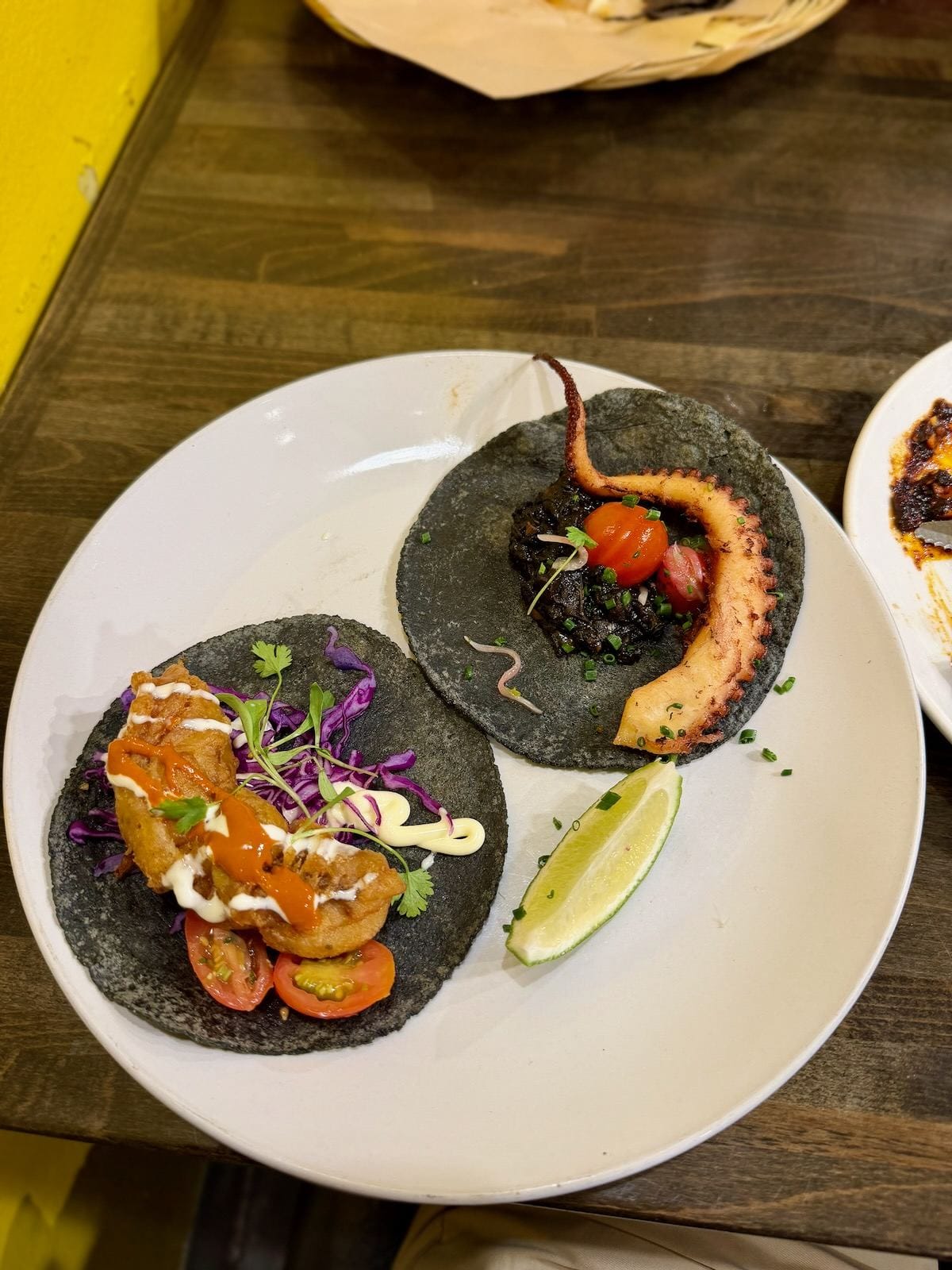
The blue corn tortilla was firm and warm with a little char along the edges from the comal. Blue corn has a deeper, more complex flavor than white or yellow corn, earthier, more mineral, and the tortillas at Komal express that fully. The taco de costilla, seared beef with crispy texture, and the quesadilla de flor are both worth ordering. But eat the tortilla on its own first and pay attention to it. It tastes like something that was always supposed to taste this way, before decades of industrial corn production simplified the flavor into something more convenient and less interesting.
Which Spots Work for Plant-Based and Sustainability-Minded Eaters?
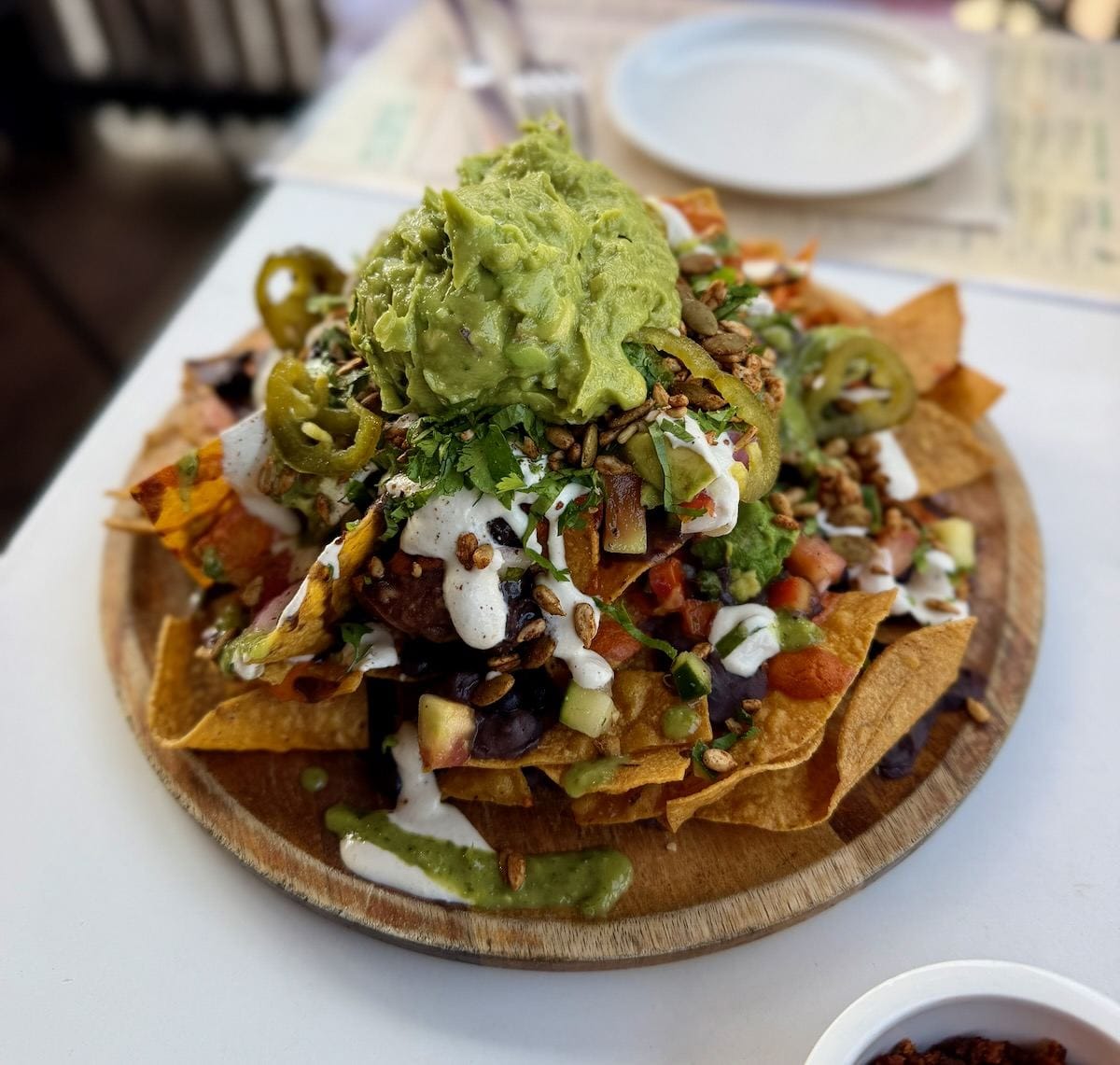
Cafe Gratitude in Los Angeles does plant-based food with conviction and without lecturing you about it. The nachos are the move, and the chicken fried sandwich, made with plant-based chicken, holds up on its own terms as a genuinely good sandwich. The smoothies and drinks are worth exploring and the space has a clarity of purpose that makes the meal feel intentional rather than compromised.
Erewhon in Pasadena functions simultaneously as a grocery store, a wellness market, and a cultural reference point. The smoothies are expensive and genuinely delicious, and the hot bar is the part most visitors overlook entirely, offering healthy prepared food that is better than most cafeteria-style setups have any right to be. Whether the Erewhon experience feels aspirational or absurd probably depends on where you are in your relationship with wellness culture. I find it somewhere between the two, which is probably why I keep going back.
Loquat in LA is a coffee and matcha stop worth visiting for their seasonal specials on both the matcha and espresso side. Daybird in LA does a fried chicken sandwich and a fish sandwich special that are both worth the stop when the fish is on the menu, along with their in-house drinks.
Where to Eat: The Full Nine-Spot List
Komal — Mercado La Paloma, Historic South Central LA. Michelin Bib Gourmand. Taco de costilla and the quesadilla de flor.
Din Tai Fung — Arcadia. Pork soup dumplings are the anchor. Add the bean curd salad, the sticky short rib appetizer, and the chocolate dumplings for dessert.
Erewhon — Pasadena. The smoothies and the hot bar.
Oseyo Shabu Shabu — Pasadena. Get the vintage beef.
Sun Nong Dan — San Gabriel. Galbi tang with purple rice.
Cafe Gratitude — Los Angeles. Nachos and the chicken fried sandwich.
Daybird — Los Angeles. Fried chicken sandwich and the fish sandwich special when available.
Loquat — Los Angeles. Seasonal matcha and espresso specials.
Holbox — Mercado La Paloma, Historic South Central LA. One Michelin star. Sea urchin ceviche and all the tacos.
Frequently Asked Questions
Is Din Tai Fung still worth it with the higher prices and longer waits? Yes. The quality has held through the expansion in a way that is worth respecting. The pork soup dumplings are still among the most consistent dumplings you will find anywhere in the US, and the full spread of bean curd salad, sticky short rib, and chocolate dumplings makes a complete meal. Go early or build in time for a wait.
What neighborhood is Holbox in and how do you find it? Holbox is inside Mercado La Paloma at 3655 S Grand Avenue in Historic South Central Los Angeles. It operates as counter service inside a shared community market. Komal, the Bib Gourmand masa stall, is in the same market, which makes visiting both in one trip a straightforward decision.
Is the San Gabriel Valley worth going out of your way for? Completely. The SGV has one of the highest concentrations of authentic Asian restaurants in the United States, built over generations by immigrant communities who cooked for their own people and kept their food culture intact. Oseyo Shabu Shabu and Sun Nong Dan are both worth the drive specifically.
Who is the sea urchin diver behind the Holbox ceviche? Stephanie Mutz of Sea Stephanie Fish (@seastephaniefish) is California's only female uni diver. She harvests sustainably off the Santa Barbara coast and supplies Holbox directly. The traceability from diver to dish is exactly the kind of sourcing relationship that makes sustainable seafood meaningful in practice.
Is Cafe Gratitude fully plant-based? Yes, the entire menu is plant-based. The nachos and the chicken fried sandwich are both good enough that the plant-based angle feels like context rather than compromise.
How does LA food compare to the Bay Area for everyday eating? LA has a broader range of excellent food at more accessible price points across more neighborhoods. The Bay Area has outstanding dining but the cost of entry is higher and the best spots require more deliberate searching. For sheer variety and value across all price points, LA has the edge, and the SGV alone makes the argument.
If you are driving to LA and want to eat well, make Mercado La Paloma your anchor. Two Michelin-recognized restaurants in the same community market, both connected by the same culinary lineage, both accessible without a reservation. Add the SGV for the galbi tang and the shabu shabu, Pasadena for breakfast and the smoothie, and Cafe Gratitude somewhere in the middle for the plant-based reset.
The best meal I had on this trip cost fifty dollars at a one-Michelin-star restaurant, sourced from a woman diving for sea urchin off the Santa Barbara coast. That combination of quality, accessibility, and sourcing integrity is the story of why LA food culture deserves more credit than it gets.
If you want more content like this, subscribe to The Catch, my newsletter on sustainable seafood, regenerative food systems, and the places worth eating at.