Bibimbap with Cep Tamari (Noma Projects)
A Korean rice bowl built around a four-month porcini ferment from Noma's test kitchen. Oyster mushrooms, seasonal vegetables, runny egg, gochujang cep tamari sauce.
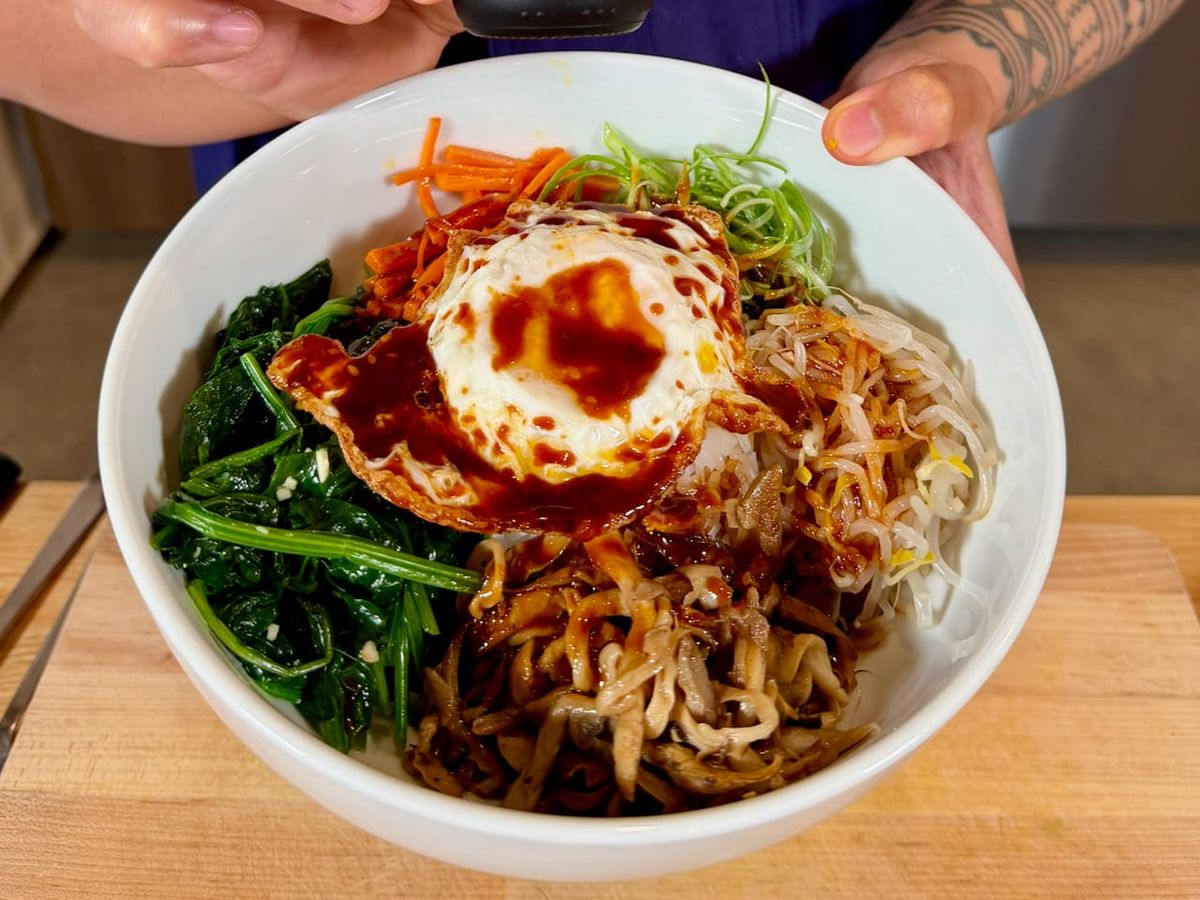
Growing up in LA, I had Korean friends who fed me like I was family. First time someone handed me a bibimbap I remember thinking -- how lucky are they to eat vegetables this way. Smothered in sauce, mixed into warm rice, topped with a runny egg. I would have eaten that every single day.
That memory came back when I opened my first Noma Projects Taste Buds box.
Taste Buds is a membership from Noma Projects that sends you small-batch ferments straight from their test kitchen before anyone else gets them. Some never get released publicly at all. Everything arrives in dark blue bottles and you genuinely don't know what's inside until you open it. The hat, the journal, the tote -- all of it high quality, all intentional. Noma Projects gifted me this box and what was inside stopped me mid-kitchen.
Cep tamari.
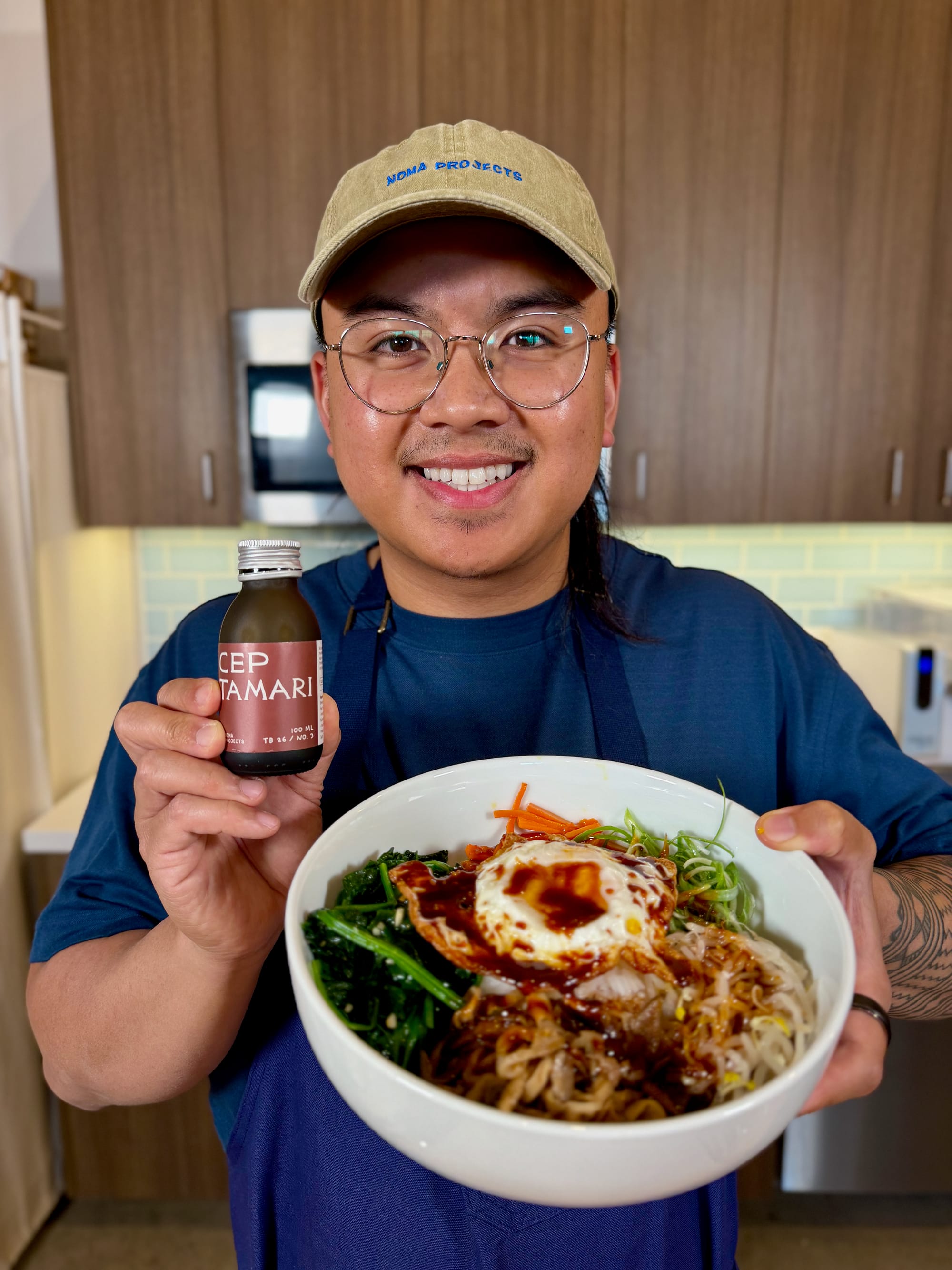
Thick and syrupy, savory and sweet, brighter than regular soy sauce with a rounded umami I've never gotten from anything else. Porcini mushrooms fermented with yellow split peas and rice koji for four to five months. Tamari is the liquid that rises to the top of miso -- most producers consider it a byproduct. Noma got obsessed with it and made it the whole product.
I knew immediately it needed to go into a bibimbap. It does two jobs: glazes the mushrooms and anchors the sauce. White and blue oyster mushrooms from the farmers market -- forageable right here in Northern California -- cooked until the edges go almost dark, then hit with tamari and mirin until lacquered and glossy. The gochujang sauce gets more cep tamari spooned over the whole bowl at the end.
What surprised me was how bright it was. Not sweet and heavy like some bibimbap sauces. Refreshing, almost. The porcini bitterness kept everything balanced. I went back for more.
Recipe is straight from the Noma Projects Taste Buds membership – their pairing for this exact product, shared here with full credit. The only way to get the cep tamari is through the membership. Waitlist link is at the bottom.
Recipe by Noma Projects. Learn more at nomaprojects.com.
Recipe
Bibimbap with Cep Tamari Sauce
Recipe by Noma Projects Serves 2 | Prep 20 minutes | Cook 30 minutes
Rice
- 300g short-grain white rice
- 360ml water
- A few drops toasted sesame oil
Mushrooms
- 200-250g mixed oyster mushrooms, sliced or torn
- 1 tbsp neutral oil
- 1 tsp cep tamari
- 1 tsp mirin
- Black pepper
Vegetables
- 300g spinach
- 1 medium carrot, julienned
- 200g soybean sprouts or mung bean sprouts
- 1 garlic clove, minced
- Neutral oil and sesame oil
- Salt
Fried Eggs
- 2 eggs
- Neutral oil
Gochujang Cep Tamari Sauce
- 1 tbsp gochujang
- 1 tbsp cep tamari
- 1 tsp rice vinegar
- 1 tsp sesame oil
- 1 tsp honey
- Splash of water to loosen
To Finish
- Toasted
- sesame seeds
- Sliced spring onions
Method
- Cook the rice. Rinse until water runs clear. Cook using your usual method. Fluff gently and season with a few drops of sesame oil. Keep warm with the lid on.
- Blanch the spinach. Boil salted water, add spinach for 20-30 seconds then straight into cold water. Squeeze very dry, chop roughly. Season with salt, minced garlic, and a few drops of sesame oil.
- Blanch the bean sprouts. Same boiling water, cook for 1 minute until just tender. Drain, cool under cold water. Season with salt and garlic.
- Cook the carrots. Heat a pan with neutral oil over medium-high. Saute carrots 2-3 minutes until just tender but still bright orange. Season with salt.
- Cook the mushrooms. Hot pan, neutral oil. Add mushrooms in a single layer and do not stir. Let them develop deep color at the edges. Once deeply golden, add the cep tamari and mirin and stir until every mushroom is glossy and the liquid has reduced. Finish with black pepper.
- Make the sauce. Whisk together gochujang, cep tamari, rice vinegar, sesame oil, and honey. Add water a teaspoon at a time until it coats a spoon but isn't thin. Taste and adjust.
- Fry the eggs. Medium-high heat, neutral oil. Sunny-side up, whites just set, yolk still runny.
- Assemble. Divide rice between two bowls. Arrange mushrooms, spinach, carrots, and sprouts in separate sections. Add a fried egg to each. Spoon sauce over everything or serve on the side. Finish with sesame seeds and spring onions. Mix at the table.
The cep tamari in this recipe is exclusive to the Noma Projects Taste Buds membership -- it's not sold individually and this batch may never be released to the public. If you want access to ferments like this one before anyone else, the waitlist is open now.