How to Go Clamming in California: A Chef's First Time
A Filipino-American chef goes clamming for the first time in Bodega Bay with Team USA competitive fishing champion Annie Nagel. What I learned about wild clams, bivalves, fresh chowder, and why this kind of eating matters.
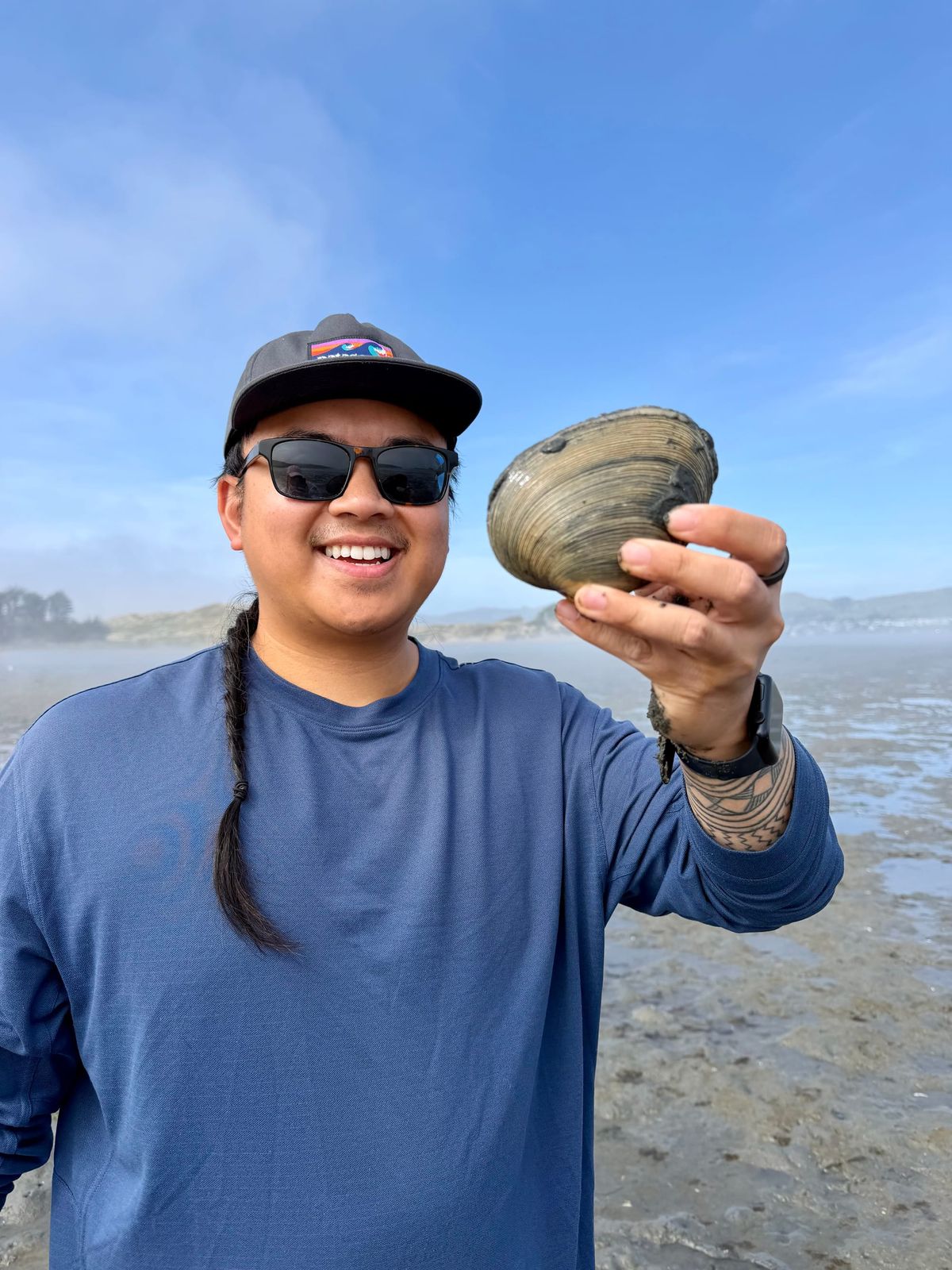
The foghorn was somewhere out across the water. I had on my jeans and my Patagonia fleece, coffee still working its way through my system, standing at the edge of a tidal flat in Bodega Bay wondering what exactly I had signed up for.
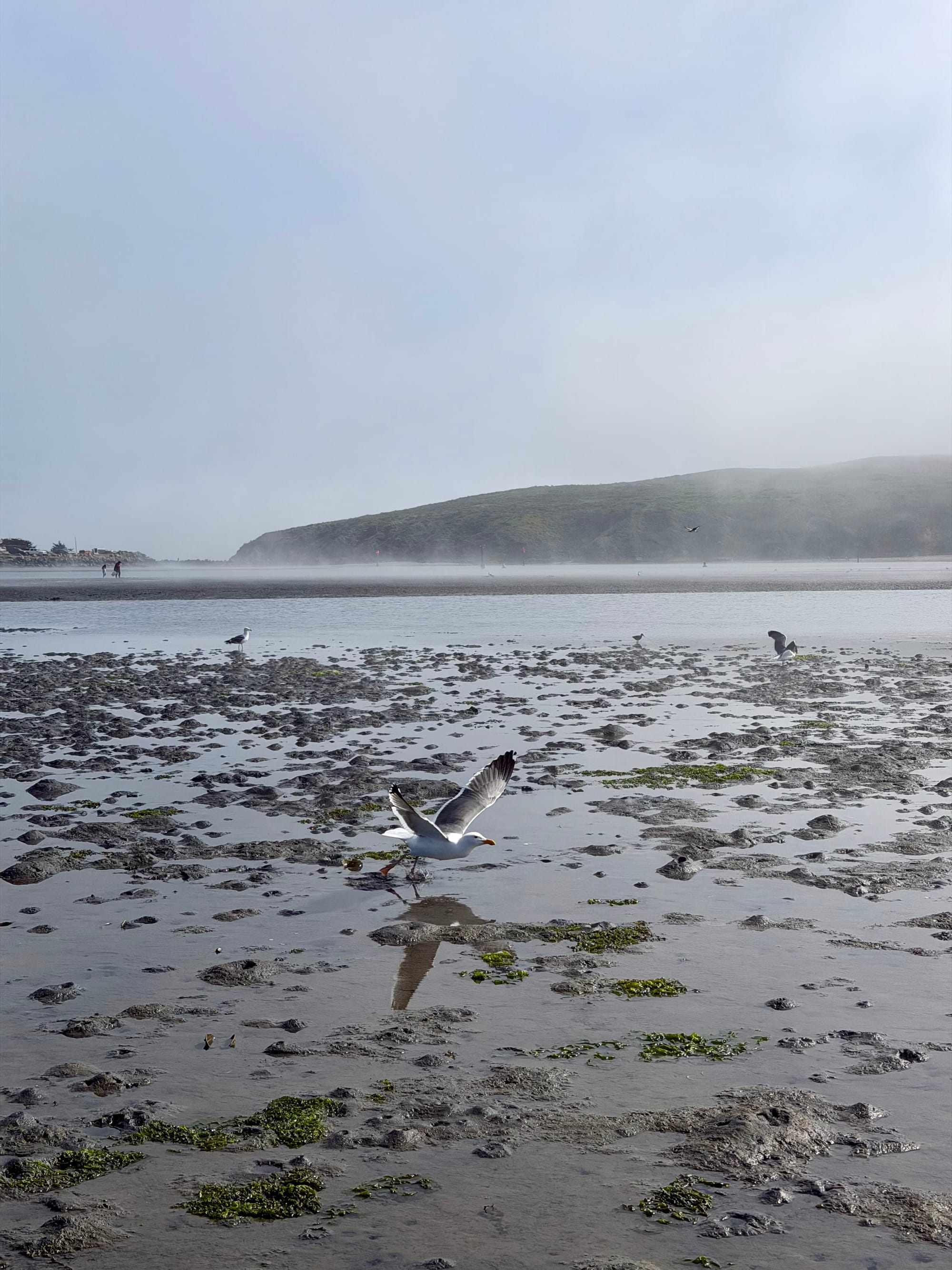
This is a fishing town. You feel it immediately. The boats, the salt air, the locals moving with the kind of unhurried purpose that comes from actually knowing what they're doing. There were already people out on the sand with shovels and buckets when I got there, doing what people in this part of California have been doing for generations.
I was there to go clamming for the first time. A Filipino-American chef who has eaten clams his entire life and had never once thought about where they actually came from.
That was about to change.
What Nobody Tells You About Clamming
I've done this before. Not clamming specifically, but foraging, fishing, getting into it with the California coast.
Mussels are easy. You walk up to a rock at low tide, grab them by hand, done. Crabbing has its own logic: traps, bait, patience, gear. There's a system to follow.
Clamming has no such mercy.
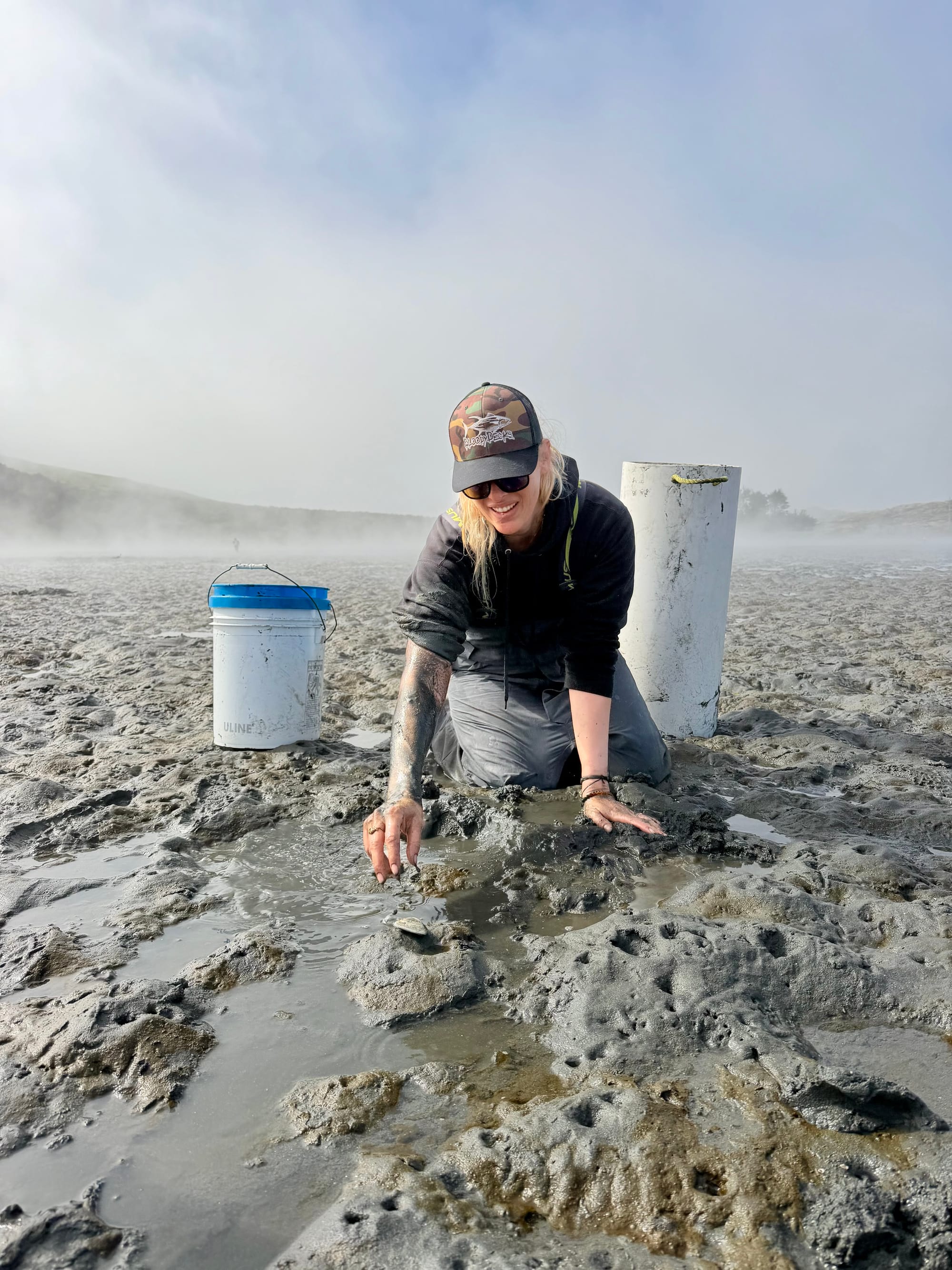
You get down in the mud. Face close to the sand. You dig. Sometimes a few inches. Sometimes your entire arm disappears into the ground and you still come up empty. The clams are not waiting for you. They hide. But they give themselves away if you know what to look for: little jets of water spurting up through holes in the sand as the tide pulls back. That spurt is your target. You spot it, you move fast, you dig, and you hope.
I was genuinely muddy. Genuinely humbled. By the end of the morning I understood why people who grow up doing this look at you a certain way when you say you love clam chowder.
Meet Annie Nagel
I first met Annie when she took me crabbing on the other side of Bodega Bay. When I heard she was running a clamming class out here, showing up was an easy call.
Annie Nagel is a double gold medalist with Team USA in competitive fishing. She knows this bay the way a chef knows their mise en place. Watching her work the sand is something. She drops to her knees, drives her arm in up to the shoulder, face practically in the dirt, and comes up holding a clam like it weighs nothing. Because for her, it doesn't.
She runs wild food experiences through Flora and Fungi Adventures. If you get the chance to learn from her, take it without thinking twice.
Follow her at @anniesfishtales on Instagram.
The Clams of the California Coast
I thought a clam was a clam. It is not.
On one tidal flat, on one morning, we pulled up three distinct species. Each one different in depth, texture, flavor, and the care required to harvest it legally.
Pacific Littleneck Clams live closest to the surface, a few inches down. Smaller shell, distinctive patterns. They require a size gauge to confirm you're only taking legal ones. Classic chowder clam.
Butter Clams (also called Washington Clams) sit deeper. They have long siphons that are easy to accidentally slice through when you're digging, which wastes meat. Annie was careful around these. The siphon carries a lot of flavor.
Gaper Clams are the deepest of all. Faint ridges on the shell, a thick outer skin on the siphon that you remove by briefly blanching before cooking. These are the ones that require your whole arm. The reward for going all the way in.
Every species has different size minimums and daily bag limits. Regulations vary by location and by time of year. Check current CDFW regulations before you go.
What You Need to Go Clamming in California
The gear list is short. The knowledge list is longer. Go with a guide your first time.
What to bring:
- Valid California sport fishing license, required for anyone 16 and older
- Shovel and a small rake
- Bucket, two if you want to keep species separate
- Size gauge for species with minimum size requirements
- Waterproof boots you don't mind getting muddy
- Old clothes, no exceptions
Before you leave the house:
- Call the CDFW biotoxin hotline: 1-800-553-4133. Bivalves are filter feeders. They accumulate toxins during algae blooms and those toxins do not cook out. This call is not optional.
- Confirm your specific location is open for harvest. Regulations vary by county.
- Check a tide chart. Clamming only works during low tide windows, which track with new and full moons.
- Do not go alone your first time. Go with someone who knows the beach, the species, and the rules.
From Sand to Chowder
Back at the campsite Annie walked us through the whole process. Fresh water bath to help the clams relax and purge the sand. Shucking with a butter knife, working carefully along the shell to cut the muscle without losing meat. Cleaning out the gut, rinsing, chopping for the pot.
I grew up eating clam chowder. Canned, mostly, the way most households do it. At Chinese restaurants where clams with black bean sauce showed up on weeknights, which was actually how I ate most of my clams growing up. On special occasions at seafood spots, the clams were almost always canned anyway because fresh wild clams are genuinely hard to source and not cheap. Even in the Bay Area, truly fresh clam chowder is rare outside of a handful of places.
What went into the pot that day was different. I want to be honest here: the chowder base was simple. That was not the point. The point was the clams. Tender in a way that canned clams never are, with a clean brininess that tasted like the exact water we had been standing in hours earlier. That oceanic depth. You taste it once from a clam you actually pulled out of the sand yourself and something shifts.
It's hard to go back to the can after that.
Why This Kind of Eating Matters
There is something that happens when you earn your food. When the mud is still under your fingernails when you sit down at the table. When you can look out at the same water your dinner came from.
I've spent years thinking seriously about regenerative food systems, about where food comes from, about what it means to eat in a way that doesn't quietly wreck the thing you love. Clamming was a reminder that the most sustainable meal is often the one you harvested yourself, in season, within limits, from a healthy ecosystem. Not because it's trendy. Because that's how it always worked before we forgot.
The ocean can keep feeding us. It just needs us to pay attention.
Want to Experience This?
Follow @anniesfishtales and @flora.fungi.adventures on Instagram for upcoming wild food experiences along the California coast. And follow me at @geronimocramos for more from the water, the market, and the kitchen.
Have you ever foraged your own seafood? Tell me about it in the comments below.
A note on responsible harvesting: Always carry a valid California fishing license, verify current CDFW regulations, call the biotoxin hotline at 1-800-553-4133 before harvesting any bivalves, respect daily bag and size limits, and go with an experienced guide your first time. Leave the beach the way you found it.