Miso Glazed Salmon Collar in the Air Fryer
California king salmon is back after a three-year ban. This air fryer miso glazed collar uses Shared Cultures butter bean white miso for a caramelized, crispy, omega-rich bite from the most underrated cut on the fish.
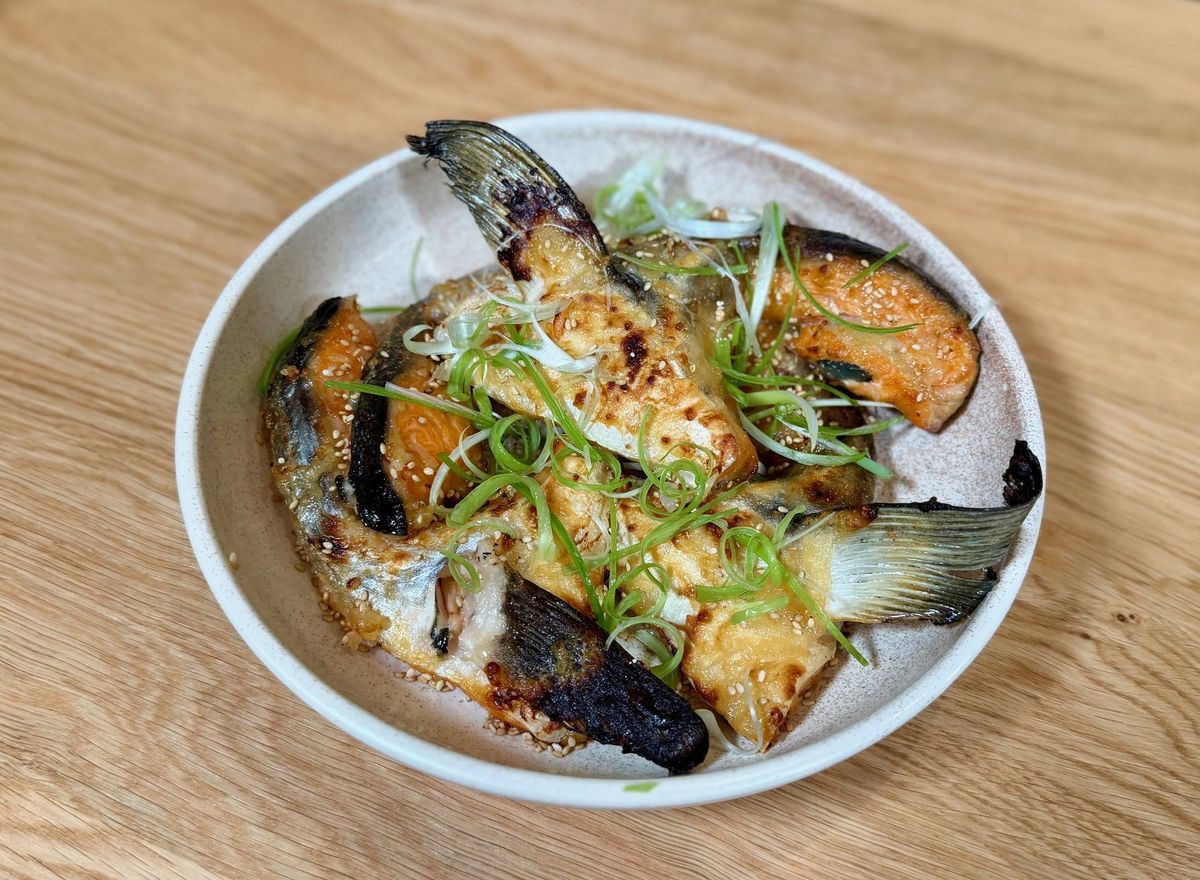
The Best Cut on the Salmon That Almost Nobody Buys
For three years, California's commercial salmon fishery was completely shut down. Drought, warming rivers, and collapsing fish populations forced the longest multi-year closure in the state's history. No boats went out. No fish came to market.
This spring, the boats finally came back. When the crew at Greenling Fish handed me two fresh California king salmon collars, still cold from the morning catch, I wasn't about to waste a single part of them.
The collar is the crescent-shaped cut right behind the gills, where the head meets the body. It's the fattiest, most omega-3-rich section of the entire fish, and it's almost always tossed aside by butchers who break the salmon down into fillets and steaks. If you've ever had hamachi kama at a Japanese restaurant, you already know this cut. The salmon version is just as good and costs a fraction of the price, if you can even find it.
I kept the preparation simple on purpose. A quick glaze built from Shared Cultures butter bean white miso, mirin, and sesame oil, then straight into the air fryer. No grill, no broiler, no fuss. Twenty minutes from counter to plate.
Why Butter Bean White Miso Works Here
Not all miso is interchangeable for a fish glaze. The classic Japanese preparation for glazed fish collar is saikyo-miso, a sweet Kyoto-style white miso that caramelizes into a glossy lacquer under high heat without overpowering the fish.
Shared Cultures' butter bean white miso follows that same profile. It's made in San Francisco with Rancho Gordo large white lima beans, organic kokuho rose rice, sea salt, water, and koji culture. The result is mild, naturally sweet, and smooth enough to whisk into a brushable glaze without any added liquid beyond mirin. The sweetness in the miso is what gives you that deep caramelization, while the umami amplifies the natural richness of the salmon fat rather than competing with it.
A darker, saltier red miso or a spiced miso would push the glaze into territory that fights the fish instead of framing it. For a collar, where the whole point is showcasing that clean, fatty bite, a white miso is the right tool.
The Air Fryer Technique (and One Mistake to Avoid)
The most common mistake with miso-glazed fish in the air fryer is glazing too early. The air fryer uses convection, meaning hot air circulates around the food from all directions. A wet glaze applied from the start does two things you don't want: it steams the skin instead of crisping it, and the sugars in the miso burn before the fish is cooked through.
The fix is to cook the collars naked first, skin side up, until the skin is glassy and crisp and the flesh is just cooked. Then brush the miso glaze on and return them for the final three to four minutes. The glaze bubbles, caramelizes, and turns into a lacquer without ever scorching. If you want that deep, restaurant-quality gloss, brush a second thin coat in the final minute. Layered coats build the finish better than one thick application.
What Makes This Sustainable
Buying a salmon collar from a local fisherman like Greenling Fish is one of the most direct ways to support a small-boat fleet that just survived three seasons with zero income. Federal disaster relief covered some of the financial damage from the closure, but for many fishermen, the losses went far beyond what relief funding could address.
When you buy the whole fish, or the parts of the fish that most people ignore, you're putting money back in the hands of the people who actually caught it. The collar, the belly, the cheeks, these are all cuts that get discarded when the market only demands fillets. Using them is how you reduce waste and support the economics of small-scale fishing at the same time.
California's 2026 season comes with strict trip limits and harvest guidelines, and in-season monitoring can trigger early closures if populations aren't holding. This isn't a return to business as usual. It's a careful, managed reopening, and the fishermen are operating under tighter constraints than ever. Supporting them now, while the fishery rebuilds, is when it matters most.
The Recipe
Frequently Asked Questions
What is a salmon collar? The collar is the crescent of meat, fat, and bone just behind the gills where the head connects to the body. It's the fattiest section on the fish and is prized in Japanese cuisine as kama. Most Western fish counters discard it during butchering, but you can ask your fishmonger to save it for you.
Why was California salmon fishing banned? California's commercial and recreational salmon fishery was closed from 2023 through 2025 due to severe declines in Sacramento River and Klamath River fall-run Chinook populations, driven by drought, warming rivers, and habitat loss. The 2026 season reopened after population forecasts improved significantly, though strict harvest limits remain in place.
Can I use a different type of miso? A mild white or sweet white miso will give you the best results for a fish glaze because its natural sweetness caramelizes cleanly under heat. Darker red or barley misos are saltier and more assertive, which can overwhelm the delicate fat of a salmon collar. If you substitute, reduce the amount slightly and taste the glaze before brushing.
Can I broil instead of air fry? Yes. Broil the collars about 6 inches from the element, skin side up, for 8 to 10 minutes until the skin crisps. Brush the miso glaze on and broil 2 to 3 more minutes, watching closely. The broiler gives you more direct control over the char than the air fryer.
Where can I buy salmon collars? Ask your local fishmonger or fish counter to set collars aside for you. Most will do it if you call ahead. In San Francisco, Greenling Fish sells directly from local boats. Japanese and Asian grocery stores also frequently carry salmon collars in the freezer section.