The SF Sustainable Seafood Guide: Where the Sourcing Actually Holds Up
A local chef's guide to San Francisco's best sustainable seafood restaurants, with verified sourcing credentials, reservation links, and what to order at each one.
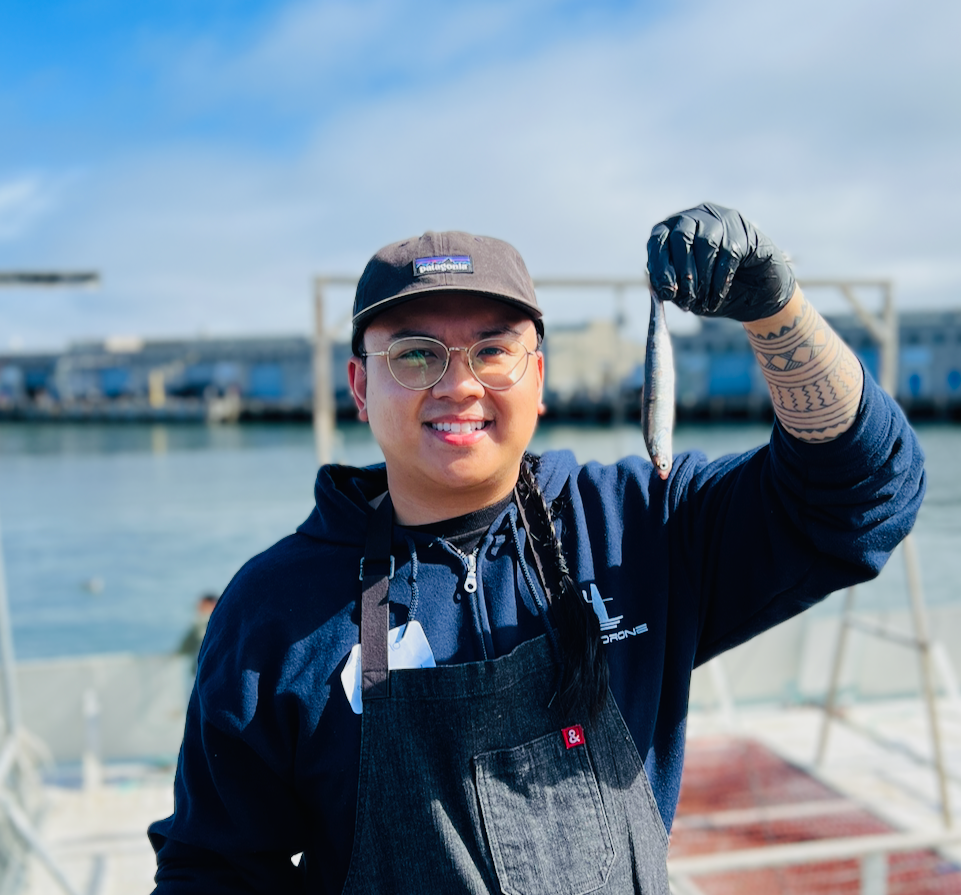
I was in a room full of fishermen and chefs. No press, no marketing decks. Just people who make their living from the water talking honestly about what they were serving and why.
Someone named the vessel the fish came from, the fishing method, the bycatch rate. That room changed how I eat.
San Francisco gives me more reason to ask those questions than almost any city on the coast. We sit at the edge of one of the richest marine ecosystems in North America. The abundance here is real. So is the responsibility.
Every restaurant on this list I have vetted personally, through relationships with the fishermen and farmers behind the supply chain and through Monterey Bay Aquarium's Seafood Watch program. When I say a place holds up, I mean it holds up to scrutiny.
What Sustainable Seafood Actually Means
The word sustainable gets used so loosely it has almost stopped meaning anything. Here is what I actually look for.
For wild-caught fish, I want to know the vessel name (when possible), the fishing method, and the bycatch rate. Knowing a fish is "local" is not enough. Knowing it came from a hook-and-line source with near-zero bycatch is different from a trawl operation sweeping the seafloor clean. We are talking about the inventory of a living planet. That distinction matters.
For farmed seafood, the question is whether the farming practice improves or degrades the surrounding ecosystem. Most farmed fish do not pass this test. But bivalves are different. Oysters, clams, mussels, scallops. They filter the water they grow in. They require no feed, no fertilizer, no chemical inputs. A well-managed oyster farm actively restores water quality. Seaweed works the same way. These are the most responsible foods you can eat, and they happen to be delicious. When you order them, you are not just avoiding harm. You are leaving something better behind.
The fastest way to verify any restaurant's claims: cross-reference their species against the Monterey Bay Aquarium Seafood Watch program at seafoodwatch.org. Green means go. Yellow means think carefully. Red means skip it, regardless of what the menu says.
Anchovy Bar
Fillmore District Reserve on OpenTable
Anchovies are embedded in my DNA as a Filipino cook. Fish sauce, which is made from fermented anchovies, is the backbone of our cuisine. Dried anchovies fried crisp and eaten as a snack. Anchovies layered into dishes to add that salty, funky umami depth that defines how Filipinos season food. So when Chef Stuart Brioza built an entire restaurant around this fish, it felt personal.
Most restaurants won't deal with the headache of fresh anchovies. The fish are fragile, perishable, and demand to be handled within hours of the catch. Chef Stuart decided that was exactly the point. Anchovies delivered within hours from local waters, cured in California-style boquerones with lime, basil, jalapeño, and garlic. The supply chain runs through Kenny Belov at TwoXSea.
The menu stays focused on small pelagics and sustainably farmed shellfish, the fish most people dismiss as bait. That restraint is a sourcing philosophy, not a limitation.
What to order: The local anchovy toast and anchovy sundae for dessert. Whatever oyster is on the raw bar that day.
Hog Island Oyster Co.
Ferry Building Walk-ins welcome
I've eaten at Hog Island more times than I can count, and every time the oysters satisfy my soul like I'm tasting the merroir of the bay. They taste like where they came from: cold, mineral, alive. Where they came from is Tomales Bay, two hours north up the coast.
Hog Island was founded by two marine biologists, John Finger and Terry Sawyer, who planted their first oyster seed in Tomales Bay in 1983. That origin matters because the science has always driven the farming. Each oyster filters up to 30 gallons of water per day. The farm uses no feed, no fertilizer, no inputs. Over five million oysters and clams a year, and the water quality in Tomales Bay improves because of it. In 2016, they became a California Benefit Corporation, meaning they are legally required to create a positive environmental impact. That is not a marketing claim. It is a legal obligation.
I also think about what comes next for the bay: the return of the Olympia oyster, native to this region, which could help restore the estuary ecosystem to something closer to what existed before industrial fishing. Hog Island is part of that longer conversation.
What to order: A dozen Sweetwaters on the half shell and splash with their hogwash mignonette. Sit outside if the weather holds.
Tsar Nicoulai Caviar Cafe
Ferry Building, Store 16 Reserve on OpenTable
Most people assume caviar and sustainability are opposites. That assumption is wrong, and Tsar Nicoulai is the proof.
California white sturgeon, farmed on 40 acres near Sacramento in Wilton, California. Every fish born in the hatchery on the farm, never pulled from the wild. No antibiotics, no growth hormones, no GMOs. Rated Best Choice by Monterey Bay Aquarium's Seafood Watch, the highest rating they give. The nation's only Eco-Certified sturgeon farm.
I want you to walk in, order the caviar flight, and feel like this is something you can actually access. Not an occasion food reserved for someone else's life. A daily luxury that happens to be one of the most responsibly produced proteins you can eat. The Caspian Sea never had to be part of this story.
What to order: The caviar flight with blini. Something cold and sparkling alongside it.
Nopa Fish
Ferry Building, Shop 31 No reservations needed
The Ferry Building lost its fish market in 2020. Chef Laurence Jossel of Nopa and Joe Conte of Water2Table brought it back, and they built it right.
Water2Table connects directly to small-boat West Coast fishermen, pulling wild-caught fish from San Francisco Bay, Monterey, and Bodega Bay. Every species is traceable to the fishery. The market counter changes daily based on what came off the boats that morning. You can buy fish to cook at home or eat a casual, honest seafood meal right there in the hall.
This is what a neighborhood fish market looks like when people who understand the supply chain build one.
What to order: Whatever is on the daily catch special board. Ask the person behind the counter where it came from. They will know the answer.
Fish.
Sausalito Waterfront Ferry from the Ferry Building, 30 minutes
Worth every minute of the ride.
Kenny Belov got fed up with being lied to about where his fish came from. So he bought a boat, started TwoXSea, and put every supplier's vessel name on a chalkboard next to the daily menu. That chalkboard is still there. The name of every boat that caught your fish is written on it. That is the whole philosophy, and it was radical when he started it.
Fish was among the first restaurants in the country to partner with Monterey Bay Aquarium's Seafood Watch program. They also developed McFarland Springs, which according to TwoXSea is the only fish farm in the world that does not use animal products in its fish feed. Vegetarian-fed trout raised in Lassen County, handled by the same supply chain that feeds the best kitchens in the Bay Area.
Catch the ferry from the Ferry Building. Sit outside on the waterfront. Eat something that knows exactly where it came from.
What to order: Whatever is on the chalkboard from the local fleet that day.
On the Radar
Angler on the Embarcadero was built by Saison Hospitality founder Joshua Skenes around a sourcing philosophy that puts local small-boat fishermen at the center of the menu. Skenes has been explicit that sustainable means genuinely sustainable, not the marketing version of the word. The kitchen is currently led by chef de cuisine Joe Hou. I have not personally verified their current supply chain in the depth I require for the main list, so they sit here until I can. The reputation is strong.
Broad Street Oyster Co. in Ghirardelli Square launched as an LA chain and had a rough first two years in SF. To their credit, they took the criticism seriously. As of March 2026, they have rebuilt around Tomales Bay oysters, Northern California halibut, and Dungeness crab, with a Bay Area chef who came up through Lazy Bear and Liholiho leading the kitchen. Worth a visit to see if the pivot holds.
How to Verify Any Seafood Restaurant
Run the species on the menu through seafoodwatch.org. Green ratings mean the fishery is well-managed and the fishing method is low-impact. Yellow means there are real concerns worth knowing. Red means skip it, regardless of what the menu or server tells you.
Then ask your server where the fish came from and how it was caught. A restaurant with genuine sourcing standards will have an answer. One that doesn't is telling you something important.
Not all farmed seafood is bad. Bivalves almost always earn strong ratings. Some farmed fin fish operations are improving and earning green ratings. Learn the difference and you will eat better and do more good every time you sit down near the water.
Frequently Asked Questions
What does sustainable seafood mean in San Francisco? It means knowing the fishing method, the vessel, and the bycatch rate for wild-caught fish, and choosing farmed seafood from operations that improve rather than degrade the surrounding ecosystem. San Francisco's proximity to the Pacific Northwest fishing fleet, Tomales Bay, and the Sacramento River Delta gives it an unusually strong foundation for responsible seafood sourcing. The ingredients to do this right exist here in a way they simply do not in most American cities.
What is the most sustainable seafood you can eat? Bivalves. Oysters, clams, mussels, and scallops filter the water they grow in, require no feed or inputs, and actively restore water quality. After bivalves: seaweed. Then wild-caught fish from Seafood Watch green-rated fisheries.
Is farmed seafood sustainable? Sometimes. Bivalves and seaweed almost always are. Farmed fin fish depends entirely on the farming method and feed source. Check Monterey Bay Aquarium's Seafood Watch for current ratings by species.
How do I know if a restaurant's sustainability claims are real? Cross-reference their menu species against seafoodwatch.org. Ask specifically where the fish came from and how it was caught. If they can name the fishery or vessel, that is a meaningful sign. If they say "sustainable" without specifics, that tells you something too.
Is Hog Island Oyster Co. good for the environment? Yes. Each oyster filters up to 30 gallons of water per day, the farm requires zero inputs, and Hog Island is a certified California Benefit Corporation legally required to create positive environmental impact.
Is Tsar Nicoulai caviar sustainable? Yes. California white sturgeon farmed on land near Sacramento, rated Best Choice by Monterey Bay Aquarium's Seafood Watch. No wild fish pulled, no bycatch, no antibiotics or GMOs.
Want to cook more sustainable seafood at home? I source mine through Seatopia. Sushi-grade, responsibly farmed, delivered directly. Use code GERONIMOCRAMOS for 15% off your first order.