Yellowtail and Salmon Tartare with Salmon Roe and Nori
A raw tartare of yellowtail and salmon with salmon roe, wrapped in toasted nori. No cooking, about twenty minutes, and the three questions I ask before I eat any fish raw.
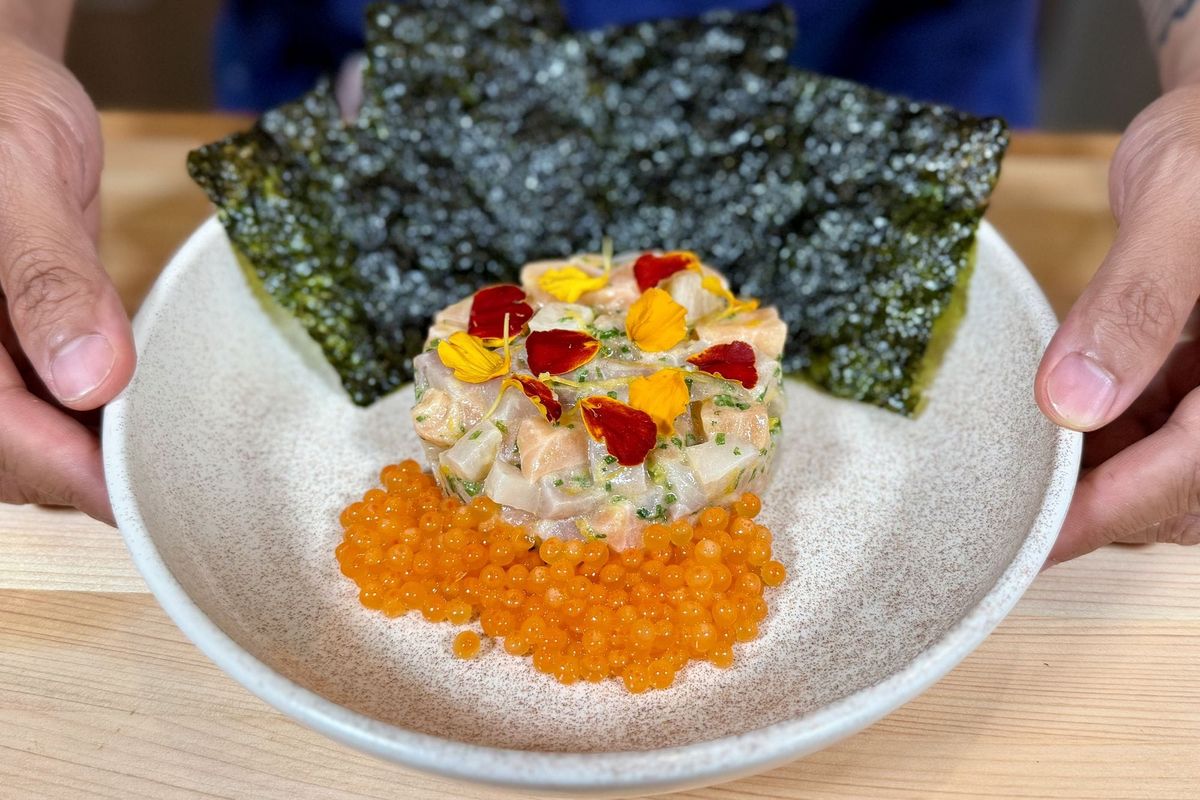
Last September I was in Copenhagen for a week at MAD Academy, studying sustainability with a room full of other cooks. A chef friend there named Casper knew I cared about seafood and sent me to a place called Iluka. I sat alone at the bar, they poured me bubbles on the house, and somewhere in the middle of the tasting menu a plate arrived that I have thought about ever since.
It was a tartare with roe on top, a mussel emulsion underneath, and seaweed on the side that you used to wrap each bite yourself. Simple, interactive, and built almost entirely on the ingredients I had spent that whole week telling chefs to put on their menus.
I came home and tried to rebuild it. The mussel emulsion did not work in my kitchen, so I stopped forcing it and let the dish become its own thing. What is left is the part that mattered: excellent raw fish, good roe, and seaweed you wrap yourself. About twenty minutes, and no cooking at all.
Some links in this post are affiliate links, which means I earn a small commission if you buy through them at no extra cost to you. The fish in this recipe was gifted by Seatopia. Use my code GERONIMO for $20 off. As an Amazon Associate I earn from qualifying purchases.
Why this recipe works
The whole dish is raw, which means there is nowhere to hide. No heat, no sauce covering anything, no long cook to fix a mistake. That sounds intimidating and it is actually freeing, because it moves almost all of the work upstream into sourcing and knife technique.
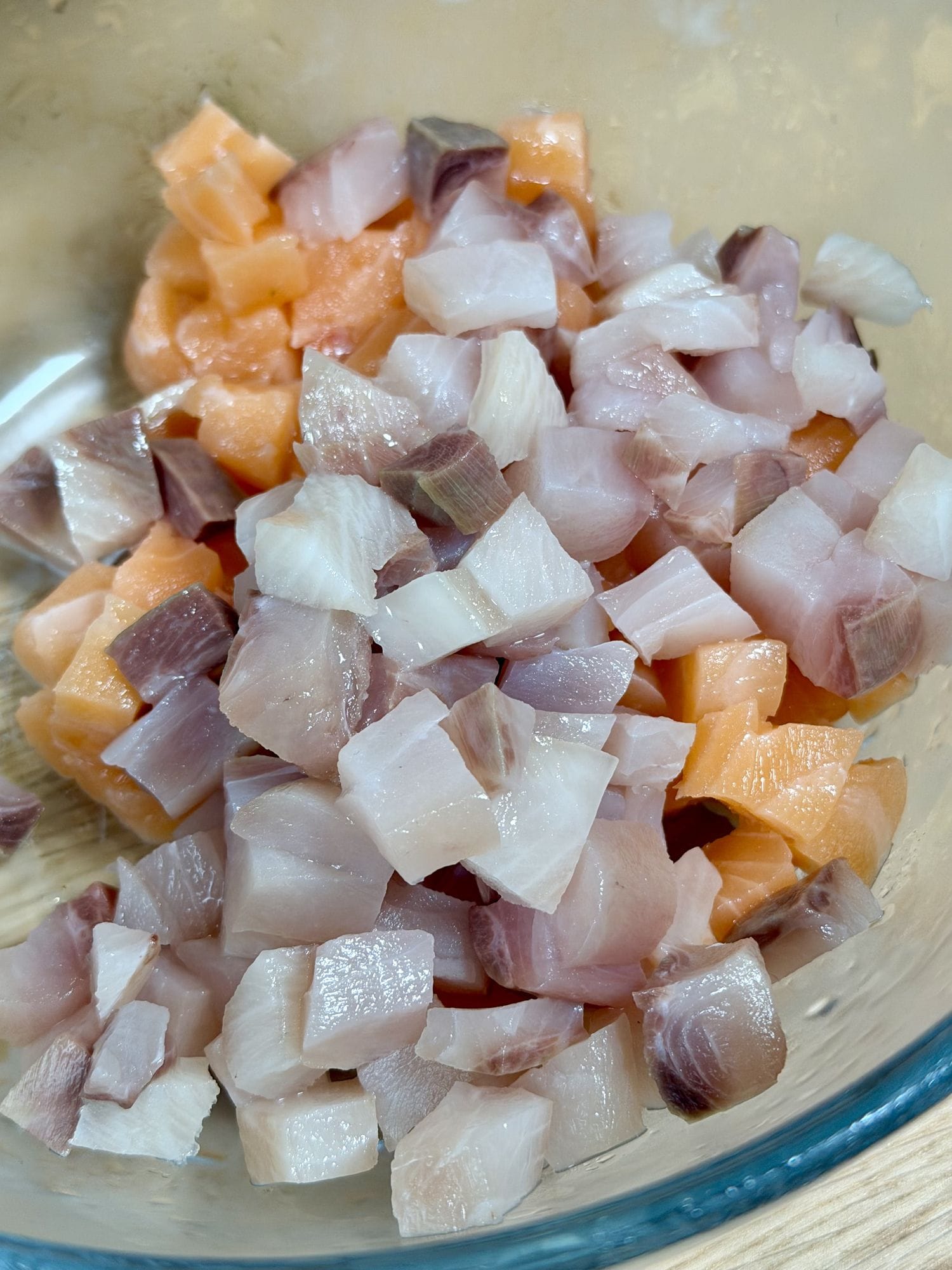
Two fish instead of one is what makes it interesting. Yellowtail is firm and clean with a buttery finish, salmon is softer and richer, and equal parts of each gives you contrast in every bite without either one taking over. Three would be too many.
The nori does two jobs. It is the vehicle, so you eat with your hands, and it is a genuine flavor component that brings ocean brine to a dish that would otherwise be all fat and acid.
The three questions I ask before I eat fish raw
There is no legal definition of sushi grade. It is a marketing term with no FDA standard behind it, which means it tells you nothing on its own. What makes it mean anything is who is standing behind it.
So I ask three things.
- Where did it come from, the boat or the farm? A name, not a country.
- How was it raised or caught? Feed, gear, system.
- How was it handled after it left the water? Chill speed, bleeding, and whether it was frozen to spec.
If nobody can answer all three, I cook it instead. A good fishmonger lights up when you ask. A bad one changes the subject.
If you want a longer version of this, I'm putting together The Catch, my newletter for eating and living well. Save your spot here.
What I used, and why
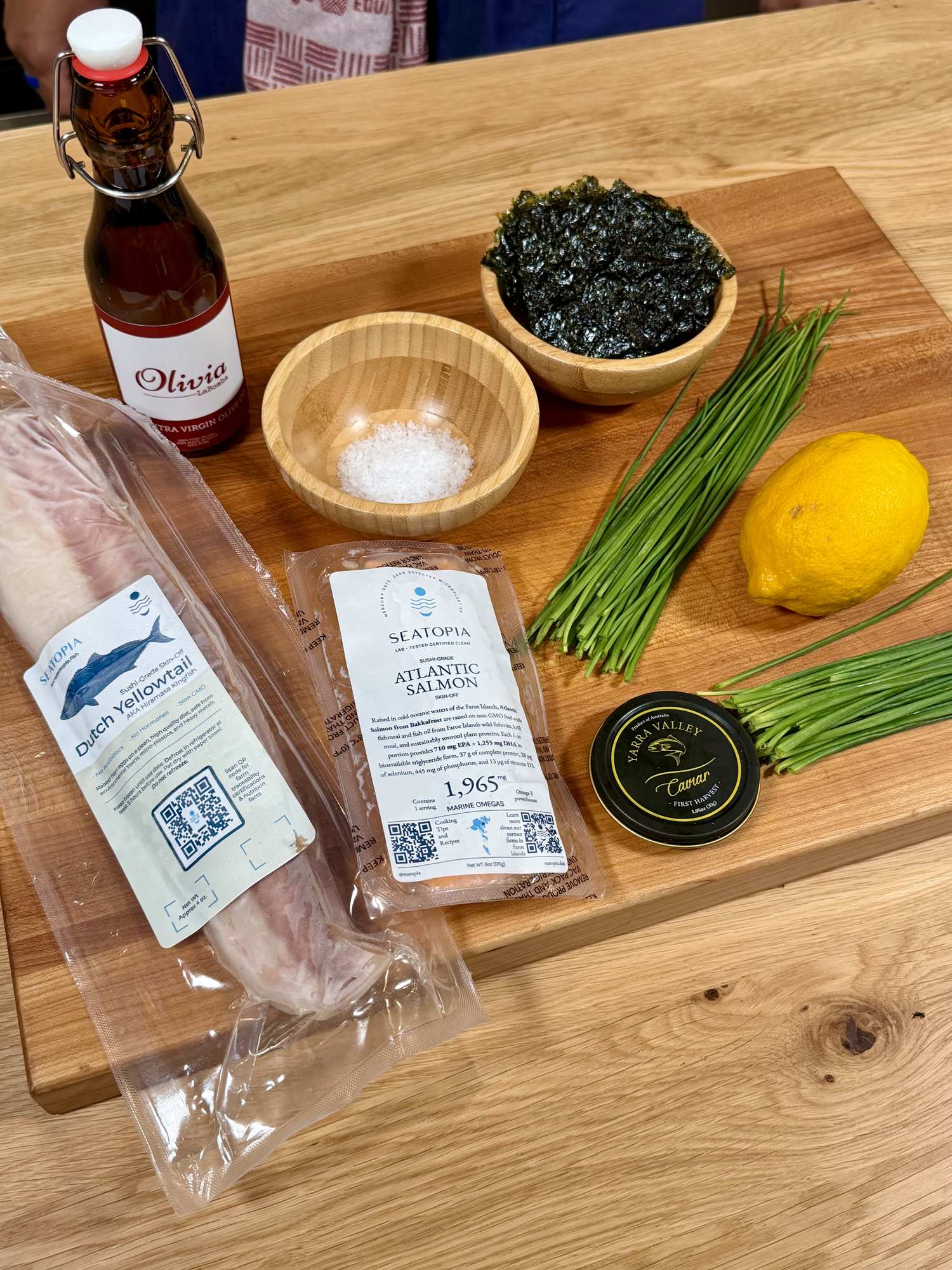
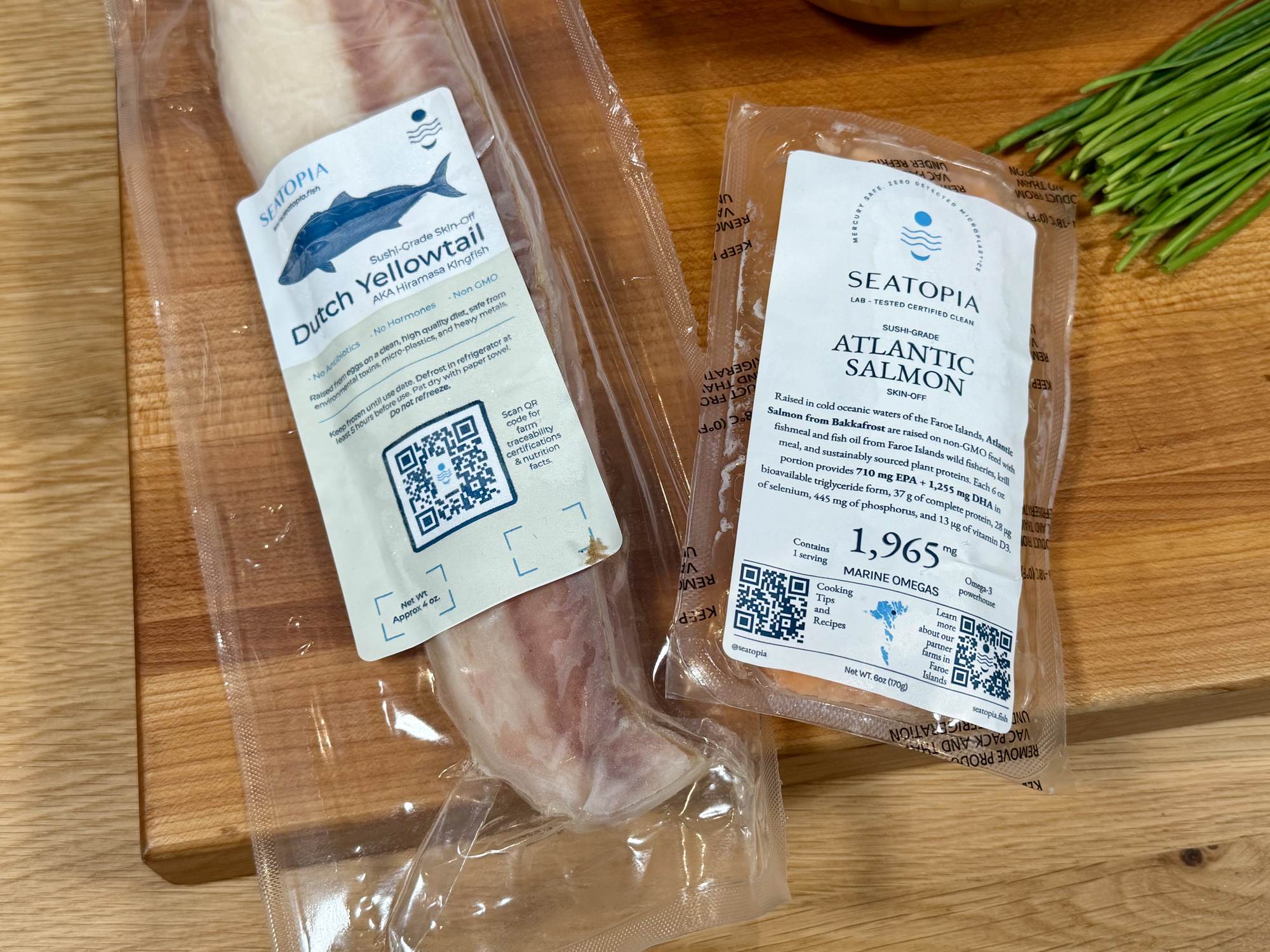
Yellowtail. Dutch yellowtail from The Kingfish Company in Zeeland, Netherlands. It is raised in land-based recirculating tanks that run on renewable electricity and use recirculated seawater rather than fresh water, and the fish are grown without antibiotics or hormones. It was the first yellowtail farm in the world to earn both ASC and BAP certification.
The part I find more useful than any certification is the lab work. Seatopia has this yellowtail tested by Edacious, an independently accredited lab that publishes results the producer cannot edit. The most recent panel came back with mercury, lead, and cadmium all non-detect, and zero detectable microplastics. That is a real answer to my third question, and almost nobody in seafood publishes it.
One note on ratings, since this comes up. Seafood Watch rates recirculating yellowtail farms by method rather than by company. Farms that treat and properly dispose of their wastewater earn a green rating. Farms that do not earn yellow, scoring 6.210 against the 6.670 needed for green. So the useful question at a fish counter is not what color a species is, it is what that specific farm does with its water.
Salmon. Bakkafrost, farmed in the Faroe Islands. No antibiotics in the population for a decade, and the company owns its own feed mill, which is rare in salmon and means they can tell you exactly what the fish ate. Seafood Watch rates Faroe Islands farmed Atlantic salmon Good Alternative rather than Best Choice, because open ocean pens do not score as high as closed land-based systems. Worth knowing rather than hiding. Almost no net-pen salmon anywhere earns a green rating.
Roe. Yarra Valley Caviar from Victoria, Australia, hand-milked from Atlantic salmon.
Nori. I used Gimmee roasted seaweed snacks, which come pre-cut, seasoned, and toasted, so there is nothing to do but open the package. If yours are plain sheets, quarter them and pass them briefly over a low flame until they crisp. Untoasted nori goes leathery inside a wrap.
Both fish came from Seatopia, who gifted them for this recipe. Code GERONIMO takes $20 off if you want to build the same box.
Tips
Cold everything. Bowl, knife, board, fish. Warm fish smears under the blade instead of dicing cleanly, and it loses its shine on the plate.
Season at the very last minute. This is the one that separates a good tartare from a sad one. Salt pulls water out of the flesh osmotically within a few minutes, so a pre-seasoned tartare weeps and slumps in the mold. Citrus is slower but does what heat does, denaturing the proteins so the fish turns opaque and firm. Fold the salt and lemon in, taste, and plate immediately.
Be generous with the olive oil at the end. It carries the seasoning and it keeps the wrap from eating dry.
One more thing on the knife. A fine, even dice on raw fish needs a sharp blade and a light hand, because pressure smears the flesh instead of cutting it. I use my New West KnifeWorks chef's knife for this, code GERONIMO10 for 10 percent off.
Frequently asked questions
Is there a legal definition of sushi grade fish?
No. Sushi grade and sashimi grade are marketing terms with no FDA definition behind them. What matters is whether the seller can tell you where the fish came from, how it was raised or caught, and how it was handled after harvest, including whether it was frozen to FDA parasite-control specifications.
Is all land-based farmed fish rated Best Choice?
No. Seafood Watch rates recirculating aquaculture systems by whether the farm treats its wastewater. Farms with effective treatment earn a green Best Choice rating. Farms without it earn a yellow Good Alternative rating, scoring 6.210 against the 6.670 threshold for green. The rating applies to the farming method worldwide rather than to any specific company, so the question to ask a producer is whether they treat and properly dispose of their effluent.
Can I use just one kind of fish?
Yes, and it will still be good. You lose the textural contrast, so lean toward yellowtail if you want firmness or salmon if you want richness.
What can I substitute for yellowtail?
Fluke, halibut, or any firm white fish you would eat raw. Apply the same three questions to whatever you swap in.
Can I make this ahead?
Dice the fish up to two hours ahead and keep it cold and unseasoned. Do not add salt or citrus until you are ready to serve.
Is it safe to eat raw fish at home?
It depends on the fish and how it was handled. FDA guidance specifies freezing protocols for parasite control in fish intended to be eaten raw, with an exemption for certain farmed fish raised in controlled systems on formulated feed. Ask your supplier which applies. That is question three.
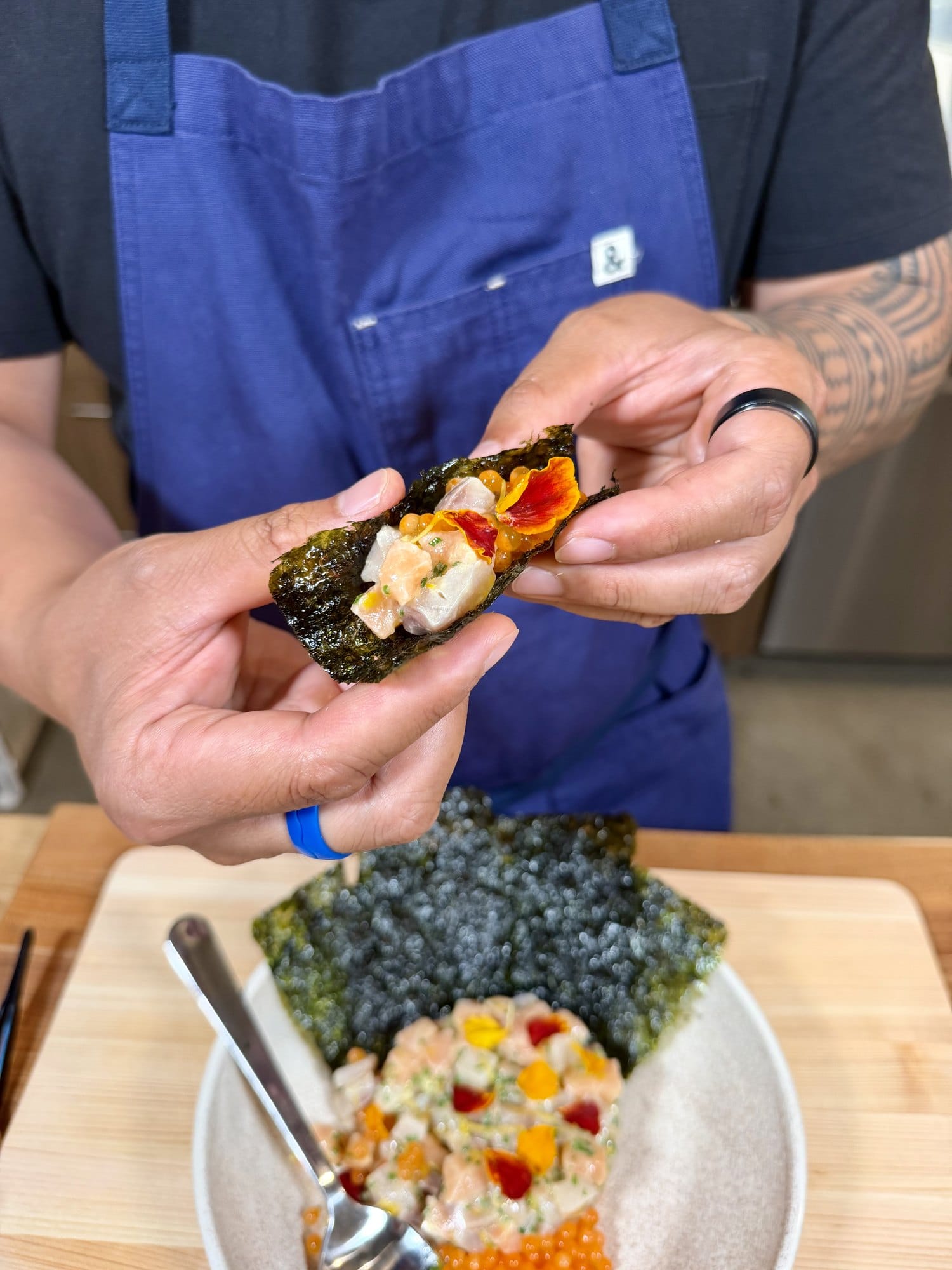
Wrap it, eat it with your hands, and do not be precious about it. That was the whole point of the dish that started this.
If you want more of this kind of thing, check out my Peruvian Scallop Crudo and Torch-Seared Steelhead Sushi Date Night the closest cousin recipes on the site.
and as always, kain na!