Shuck Your Own Thursdays at Hog Island: A Chef's Guide to Tomales Bay
Every Thursday from April through October, Hog Island Oyster Farm opens The Boat for walk-ins on Tomales Bay. Here's what an afternoon of shucking, tasting, and learning the farm's five oyster varieties actually looks like, and why it's worth the drive.
The drive up
I've been telling people for years that the best meal you'll eat in Northern California isn't in a restaurant. It's an hour north of San Francisco, at a picnic table, on a farm.
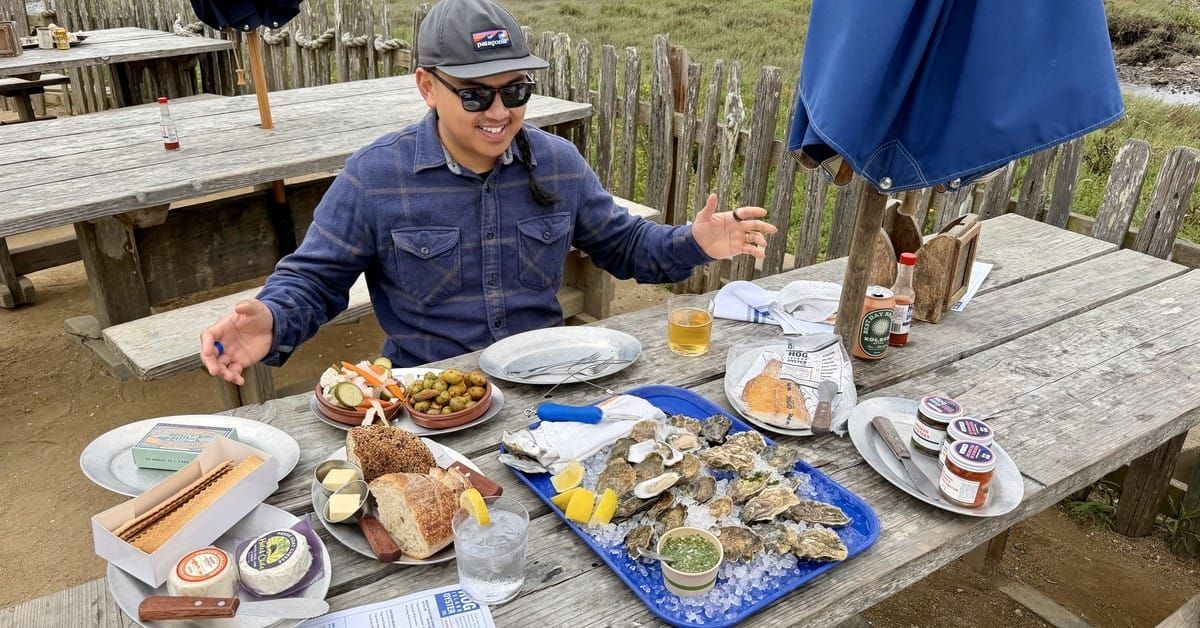
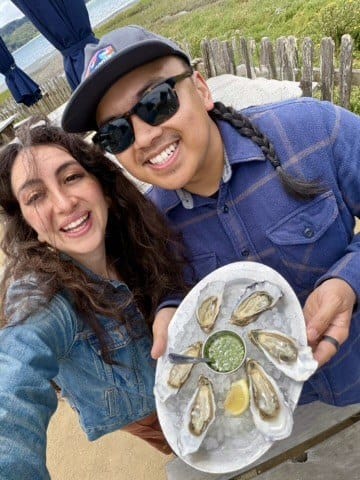
Hog Island Oyster Co. has been growing oysters on Tomales Bay since 1983, and every Thursday from April through October they open The Boat, their outdoor oyster bar, to walk-ins. No reservation. You just show up, grab a table on the water, and order. I'd been meaning to make the drive for months. When I finally did, I brought my friend Soraya along, and we stayed long enough to eat more oysters than either of us wants to admit in writing.
This isn't a review. It's closer to a field guide. If you've never been, here's what to expect, what to order, and why a farm that grows oysters in the same water you're eating them out of is doing something most restaurants can only gesture at.
What Shuck Your Own Thursdays actually is
The name is literal. You show up, you get seated at a picnic table facing the bay, and if you've never shucked an oyster before, someone on the team will sit down and walk you through it. Dylan, one of Hog Island's culinary team members, is one of the cleanest shuckers I've ever watched work. There's no wasted motion. The knife finds the hinge, the shell pops, and the oyster comes away whole and glistening. He teaches you how to shuck like opening a can of sardines.
Soraya had never shucked before. Watching her go from tentative to confident over the course of one dozen was its own kind of entertainment, and it's the exact reason this format works better than a normal restaurant meal. You're not a passive diner here. You're part of the process.
The setup is casual by design. Picnic tables, ice, an open-air bar built out of a converted boat, and Tomales Bay right there past the railing. Guests are welcome to order from the full menu, but outside food and drink aren't allowed, which makes sense once you see how much is actually on offer.
The oysters, and why they don't all taste the same
Most people assume an oyster is an oyster. Hog Island will correct that assumption within about two bites. They grow several distinct varieties on the farm, and each one tastes meaningfully different depending on species and where it's raised.
The Sweetwater is their signature Pacific oyster, grown where Walker Creek meets the bay. The fresh water mixing with the salt gives it a sweetness up front with a smoky, almost mineral finish. The Atlantic is a Virginica, the classic East Coast species, and it leans crisp and briny with a cleaner mineral edge than the Sweetwater. The Highwater comes from their second farm in Humboldt Bay, tide-tumbled in the mudflats, and it carries a seaweed umami note with an earthy finish that the Tomales Bay oysters don't have. They also grow Kumamotos, which are small, mild, and almost fruity, and they're part of the ongoing effort to restore the native Olympia oyster, once nearly wiped out along the California coast.
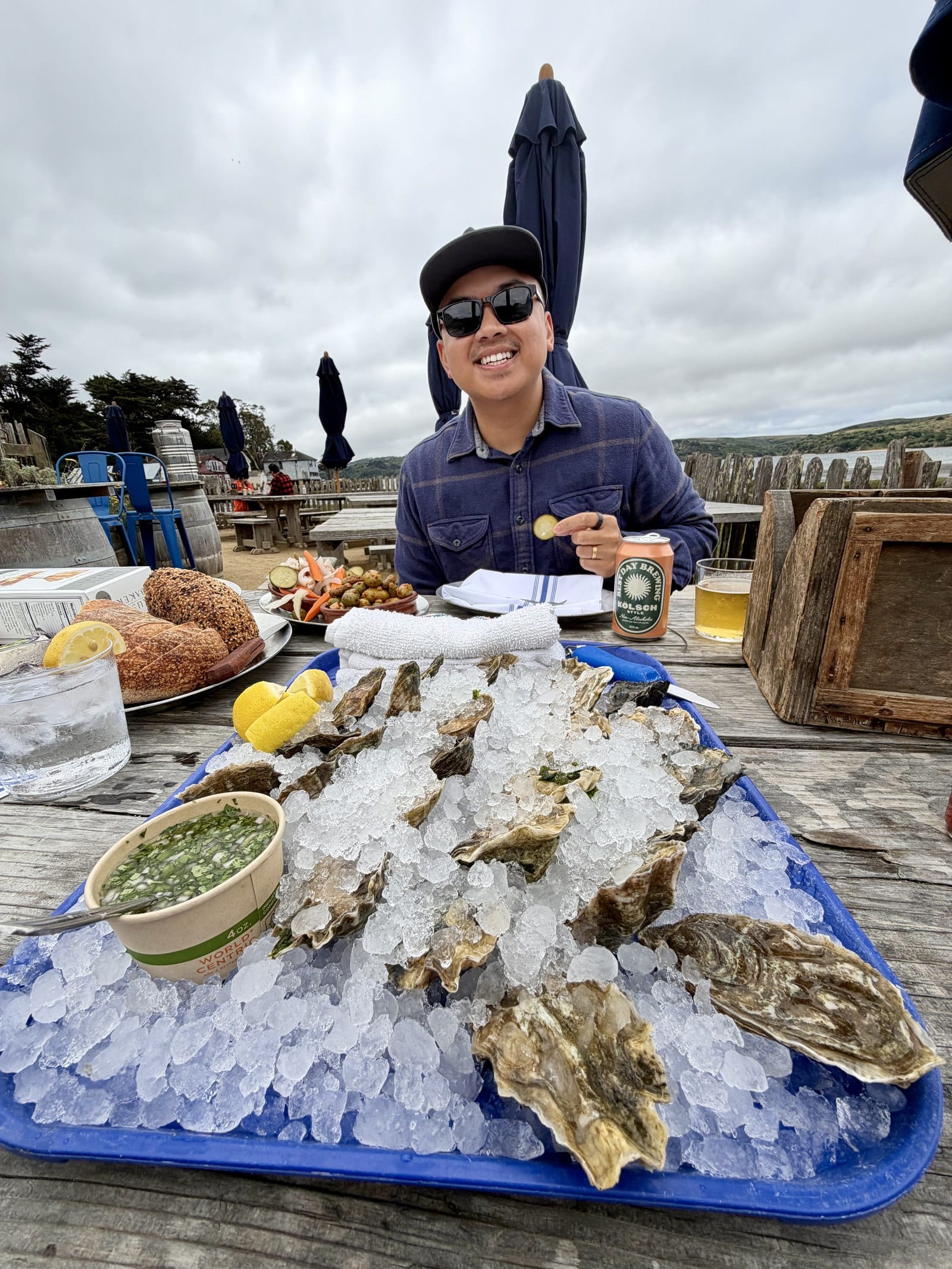
If you only order one dozen, get a mixed tray. Tasting them side by side is the fastest way to understand what farmers mean when they talk about terroir in shellfish. The water an oyster grows in shapes its flavor the same way soil shapes a wine grape, and Tomales Bay versus Humboldt Bay is a genuinely different expression of the same species.
There's a reason for that beyond flavor, too. Oysters filter the water they live in constantly, and that filtration is part of what makes them useful indicators of water quality and ocean health. It's also, oddly, part of what makes them taste like where they're from. You're not just eating a protein. You're tasting a specific bay on a specific day.
What else to order
The raw oysters are the reason to come, but they're not the whole meal. We ordered the grilled oysters two ways, chipotle bourbon butter and miso nori butter, and both were gone faster than either of us wanted to admit. The char plus the butter changes the oyster into something almost unrecognizable from the raw version, and if you're introducing someone to oysters for the first time, grilled is often the easier entry point.
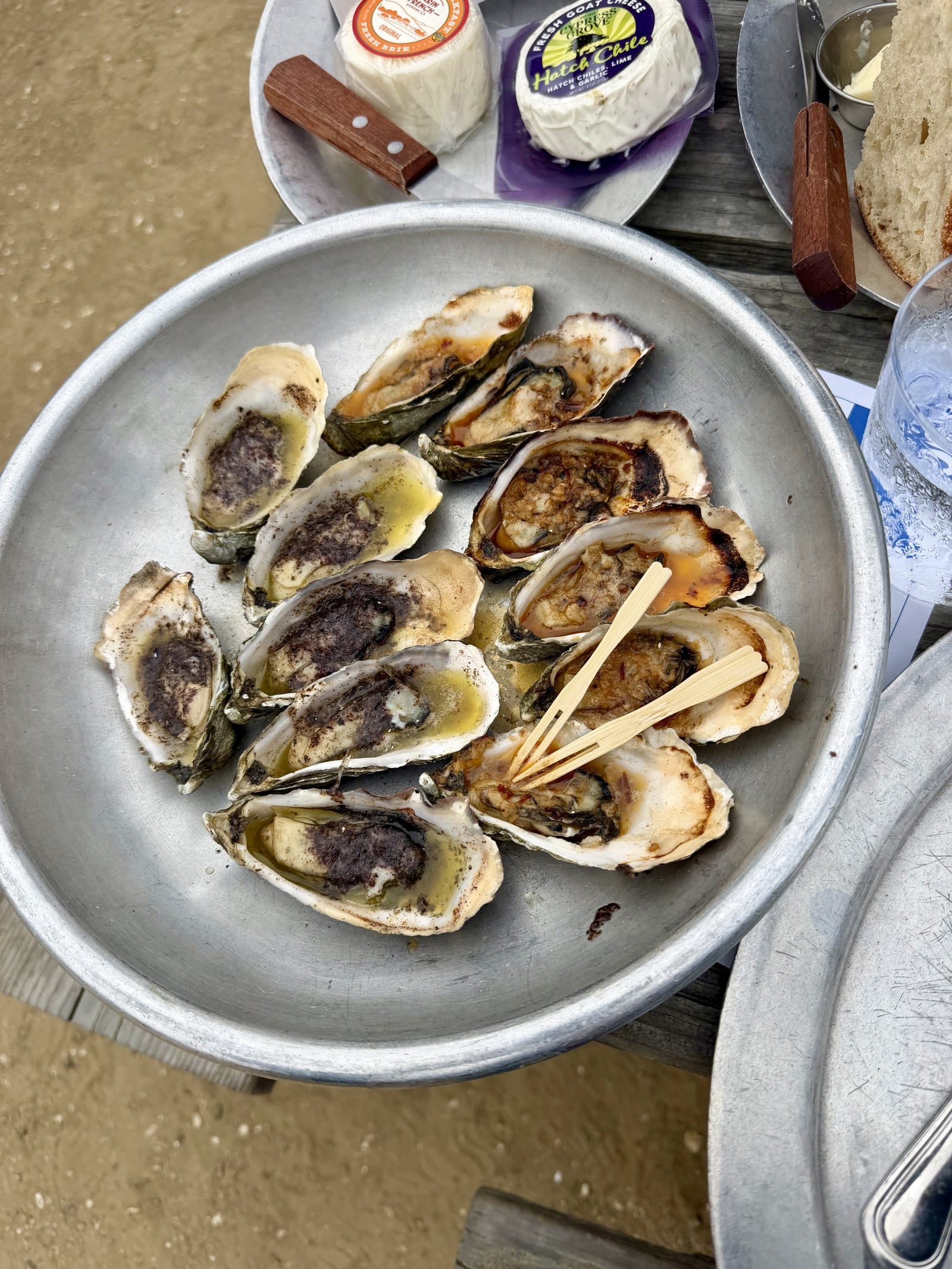
We also went through a spread of conservas, Hog Island's tinned preparations: smoked oysters, oysters in agrodolce, and mussels in escabeche. Tinned seafood has had a real resurgence over the past few years, and it's easy to see why once you've had a good version. These aren't an afterthought. They're a legitimate way to experience the farm's product in a completely different form, and they travel well if you want to bring some home from the General Store.
Round it out with the smoked black cod, a loaf of sourdough, and the pickles, and you've got a spread that could easily feed four people comfortably, though we did not exercise that kind of restraint.
The General Store, and the site's older history
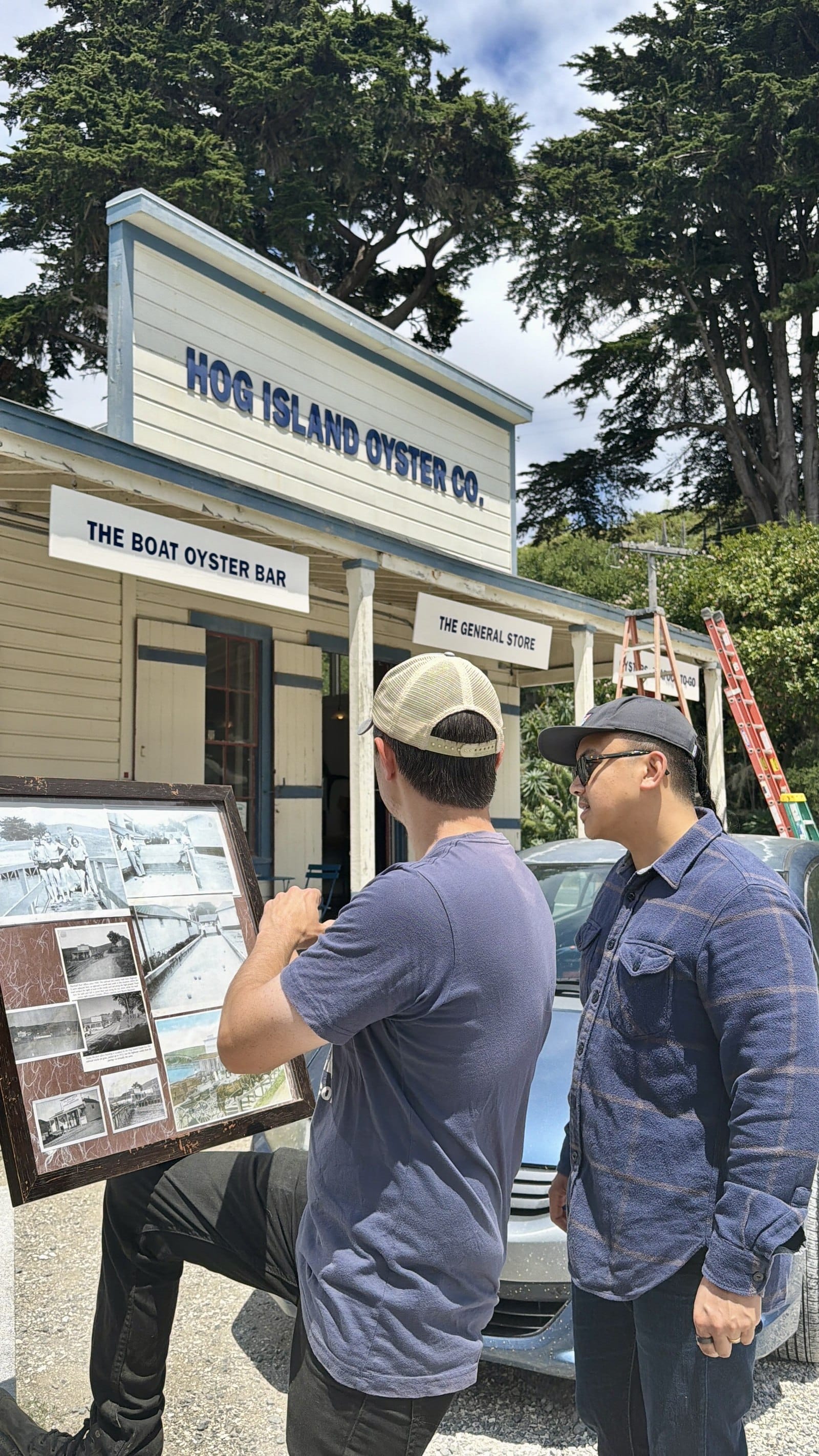
Before we left, Casey, the general manager, walked us over to the newly opened General Store, right on the property. It's stocked with oysters to take home, some of their conservas and pantry goods, and merchandise. If you want the Hog Island experience but can't make it out on a Thursday, the store is open daily and you can now order ahead online.
What I didn't expect was the history built into the site. There's an old placard on the property showing what the location used to be: a general store from an earlier era, back when train tracks ran along this stretch of the bay. Marshall was a real stop on the North Pacific Coast Railroad line once, and the current General Store is, in a small way, a continuation of that same function on the same land. It's a detail most people will miss unless someone points it out, which is exactly why I'm pointing it out.
Why this matters beyond one good meal
I get asked a lot what "regenerative seafood" actually looks like in practice, because it's a term that gets used loosely. Hog Island is a genuinely clear example. Oyster farming doesn't require feed, doesn't require freshwater, and the oysters themselves improve water quality while they grow. A farm like this one is producing food while actively supporting the health of the bay it sits in, which is close to the opposite of how most protein gets produced.
It's worth remembering during World Oceans Month specifically, not because the farm needs a seasonal hook to be worth visiting, but because this is one of the more accessible ways to actually experience what ocean stewardship looks like when it's working. You don't have to read about it. You can go sit on the water and eat the proof.
Practical details
- Shuck Your Own Thursdays: April through October, 11 AM to 4 PM, walk-ins only, no reservation
- Location: The Boat, Hog Island Oyster Co., 20215 Shoreline Hwy, Marshall, CA
- General Store: Open daily, 9 AM to 5 PM, online ordering now available
- Good to know: Outside food and drink are not permitted at The Boat
FAQ
Do I need a reservation for Shuck Your Own Thursdays? No. It's walk-ins only, every Thursday from April through October, 11 AM to 4 PM.
Will they teach me how to shuck an oyster if I've never done it? Yes. Hog Island's team will sit down with you and walk you through the technique before you try it yourself if you ask.
What oyster varieties does Hog Island grow? Several, including the Sweetwater, Atlantic, Highwater, and Kumamoto, along with ongoing restoration work with the native Olympia oyster. Each variety has a distinct flavor profile shaped by where it's grown.
Can I order Hog Island oysters without visiting the farm? Yes. Their General Store is open daily and now offers online ordering ahead of your visit.
How far is Hog Island Oyster Farm from San Francisco? About an hour's drive north to Marshall, CA, on Tomales Bay.